Tartan is a serious business. It’s imbued with the lyricism of the Highlands but woven through countless chapters and centuries of blood-soaked history. It’s a material of rebellion that’s frequently misunderstood. For tourists, it’s a souvenir from a walk along the Royal Mile in Edinburgh – a Royal Stewart cashmere scarf or a blush-pink poncho in the Diana, Princess of Wales Memorial Rose Tartan.
Every April in New York City, thousands of people turn up for the Tartan Day Parade, while new tartans are designed and added to the Scottish Register of Tartans daily. There’s a Hello Kitty one; a Harley-Davidson one, too. There are dark commemorative patterns: the Titanic tartan is based on the deckchairs of the doomed ocean liner, while a recent addition came from the Witches of Scotland – a black, grey, red and pink pattern that references the colour of the legal tapes used to bind papers that doomed women accused of witchcraft between the 16th and 18th centuries.
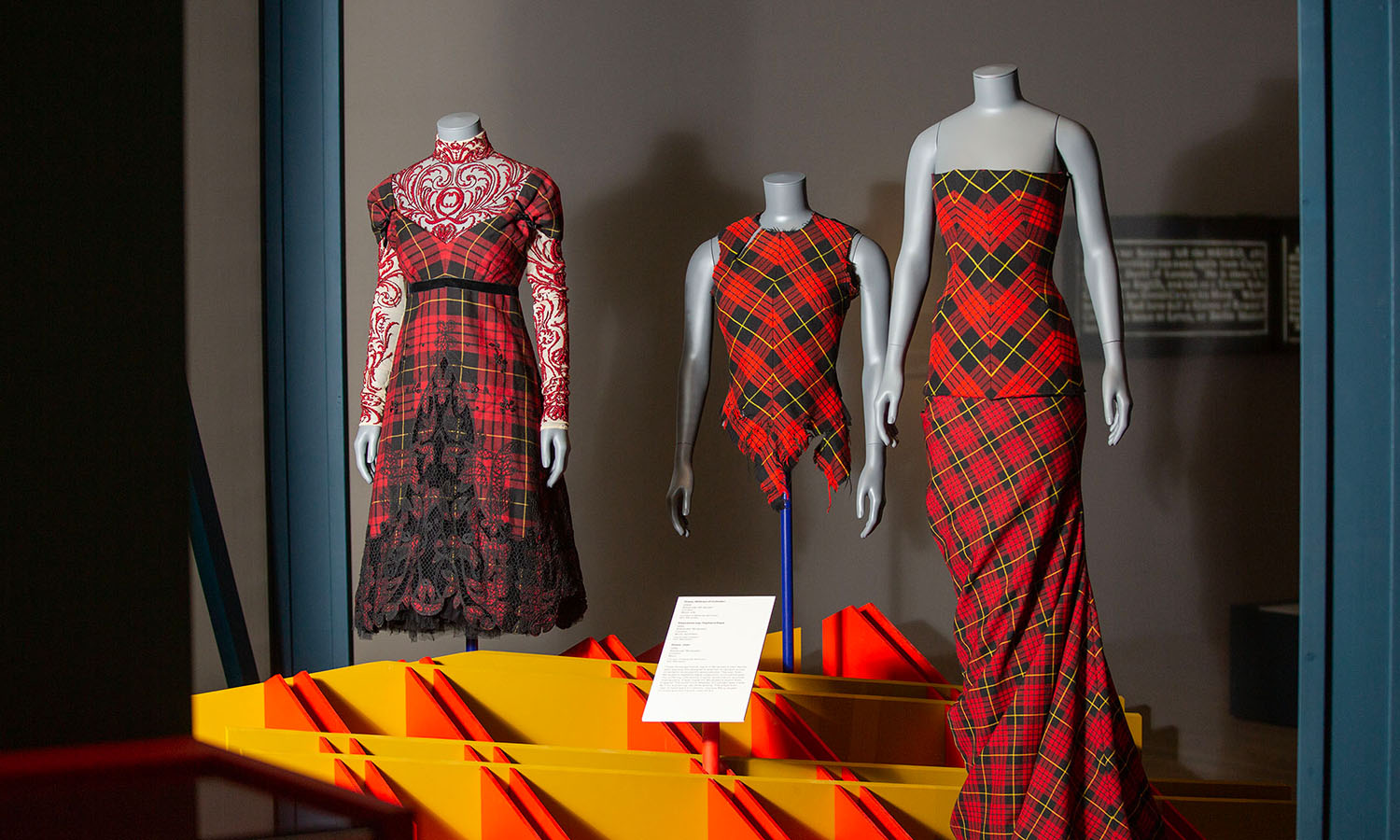
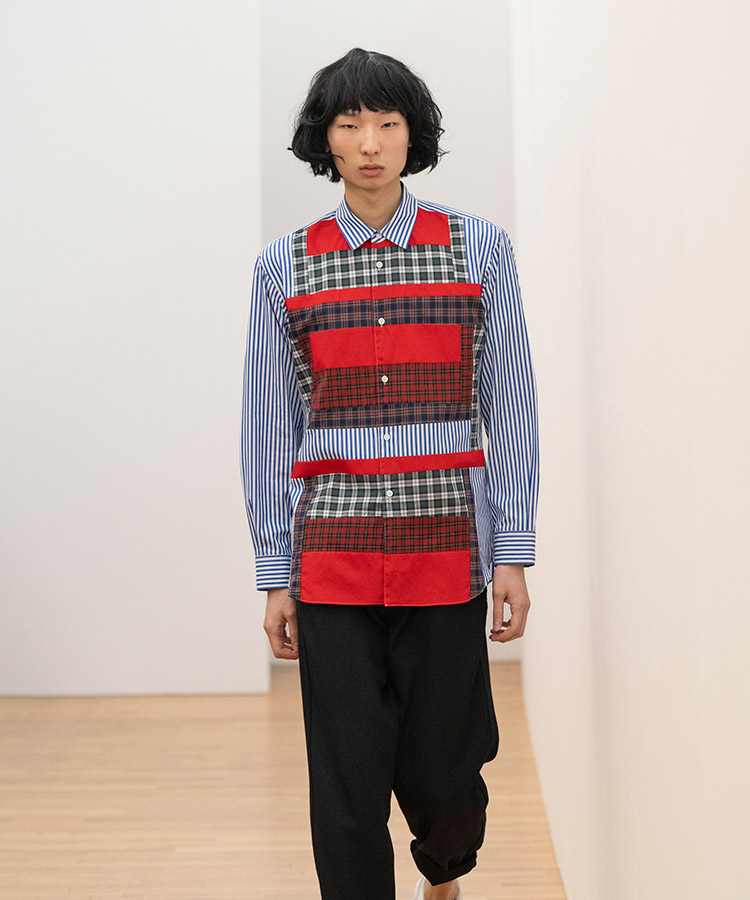
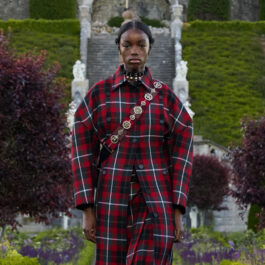
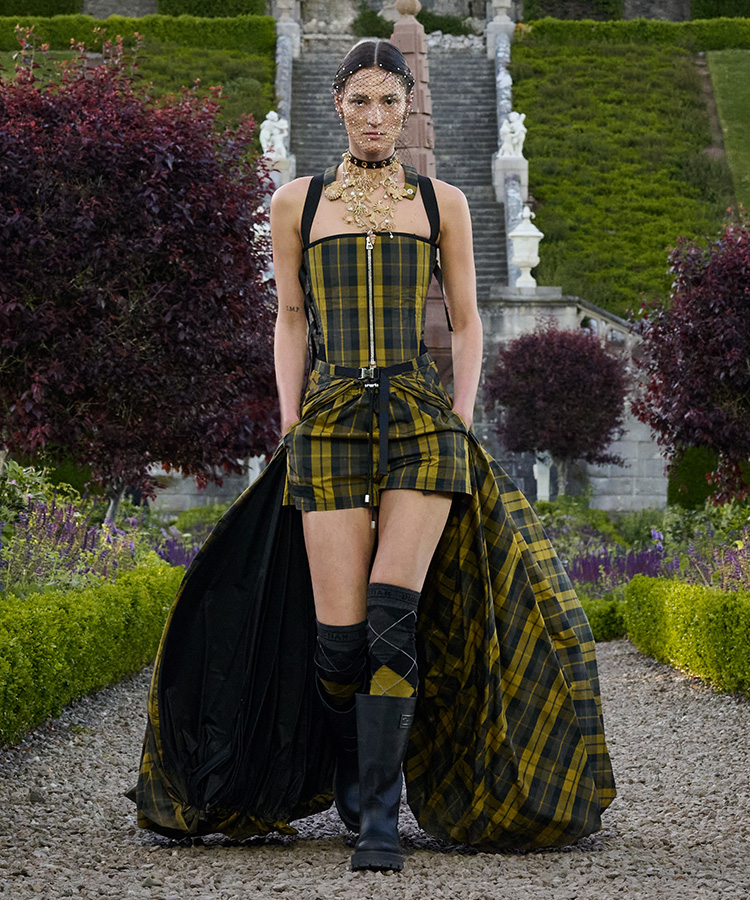
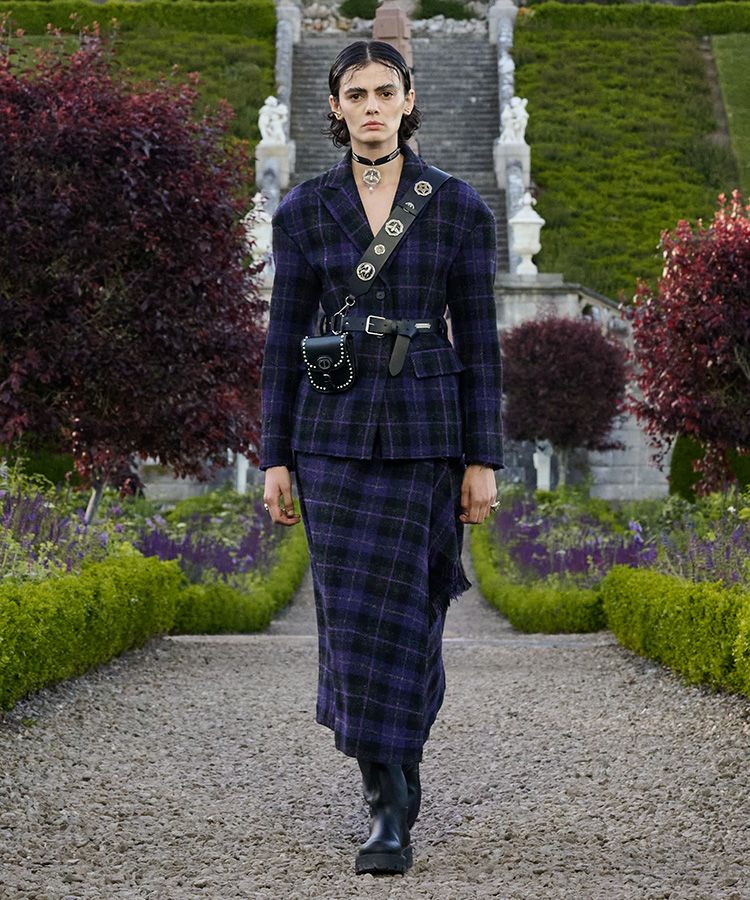
Tartan is also, of course, the stuff of couture, craft and glamour: Maria Grazia Chiuri used it for her penultimate cruise collection last year (before she handed over captainship of the house of Dior to Jonathan Anderson this spring), and there’s plenty of it in this winter’s Black Comme des Garçons range, with sleeves and skirts attached to the rest of a garment solely by buckles.
One of the items that defined fashion in 2025 was the dual-pattern tartan kilt by London design duo Chopova Lowena, worn by Grian Chatten, lead singer with Fontaines DC, at the Irish band’s sold-out show at Finsbury Park this summer. It brought the kind of instant attention to the micro-indie brand that LVMH executives would sell souls for.
Designers using tartan in their collections treat it largely with respect. Alexander McQueen is the most obvious and poignant example. He used the MacQueen clan tartan in 1995’s Highland Rape collection, shown during London Fashion Week in what was a dramatic performance as much as a runway presentation (the clothes were never intended to be commercially produced). It told the story of the brutal Highland Clearances in the 18th and 19th centuries.
McQueen used it once more in 2006 for his Widows of Culloden collection – again, inspired by the violence inflicted on the Scottish by the English. Talking to a reporter in 1999, he said, “Scotland has been dealt a really hard hand. It’s marketed the world over as, you know, fucking haggis, fucking bagpipes … I hate it when people romanticise Scotland. There’s nothing romantic about its history.” In 2010, McQueen’s ashes were scattered in the cemetery of Kilmuir on the Isle of Skye, and his works in tartan are constantly on display in major museums worldwide.
The Battle of Culloden was one of the last times that tartan could be worn unrestricted by the clans of Scotland. The Dress Act, passed by Parliament in 1746, outlawed it for 36 years, which is why tartan became, centuries later, an emblem of punk. It was adopted by Malcolm McLaren and Vivienne Westwood, who cut it into bondage gear in the 1970s, and later by Jean Paul Gaultier when he was still an enfant terrible.
“The Scottish Register of Tartans was established after an act of Scottish Parliament in 2008,” says John F McLeish, chairman of the Scottish Tartans Authority, which has been promoting and preserving the history of the cloth since 1995. “There’s a good reason why it’s the ‘Scottish’ register. It has deep cultural significance to us. The 10,000th tartan was registered recently, and a computer programme is used to test the uniqueness of a design.”
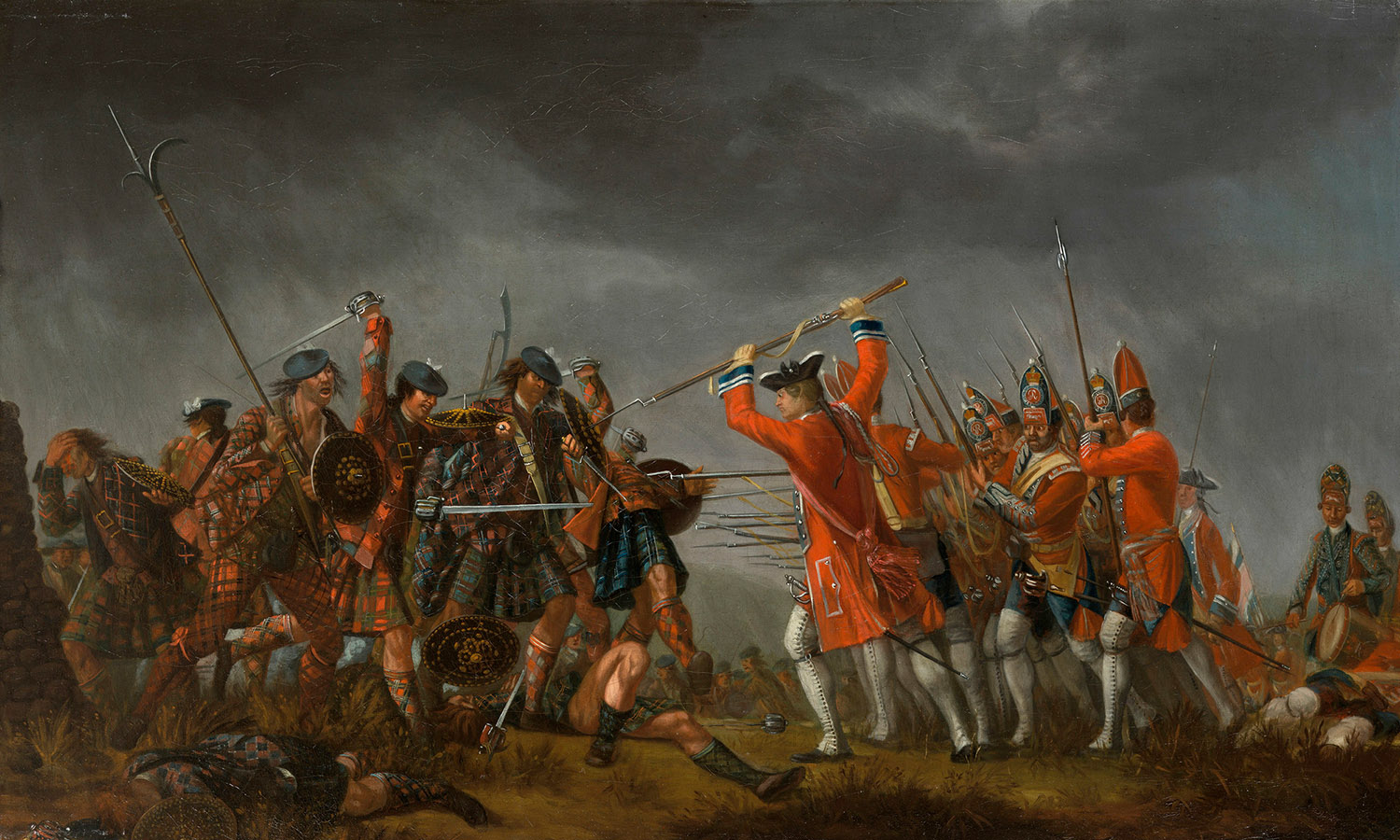
McLeish points to David Morier’s oil painting An Incident in the Rebellion of 1745 – part of the Royal Collection held at Holyrood Palace – as evidence that tartan is misunderstood in the modern day: “It shows rugged highlanders attacking a line of English redcoats, and if you look closely, you’ll see that there are lots of variations in the tartans on the Scottish side. It wasn’t a single uniform. The idea of one tartan representing a clan only came about in the 19th century. And the cloth is really bright. Muted tartans are in fashion today, but back then, they were as bright as can be. Clan chiefs wore the most striking red because it showed you were using imported materials – the cochineal beetle gave a colour much stronger than plant dyes.”
The Witches of Scotland tartan is something McLeish sees as a sign that the connotations behind these plaids have changed. A proprietary set of stripes and checks is now branding as well as merchandise. “Today, a tartan is seen as a badge of belonging,” he says. “When a pattern is submitted for registration, it has to come with details of which of nine categories it’s going into: family, name, district, corporate, commemorative, military, royal, fashion or ‘other’.” A lot of the most familiar patterns on the register are “fashion”, including 13 attributed to Vivienne Westwood. Being on the register doesn’t give a designer copyright on a tartan, though – for that, they need to register it with the Intellectual Property Office. This is all a sign of how tartan has become more and more relevant to modern design.
It’s no surprise that Chanel has exclusivity on the tartan that historian Peter E MacDonald designed for the house and registered in 2023, but the relationship between its plaid and Coco’s maison is more complex than mere marketing. The pattern was created alongside the Tweed de Chanel haute jewellery collection, designed by Patrice Leguéreau, creative director of Chanel Fine Jewellery. He made 45 extraordinary pieces (now expanded to 63) based on five different tweeds. The Tweed Lion pieces from the collection are an incredible interpretation of iconic Chanel fabrics using diamonds, rubies and gold. It was engineering genius, too: the Tweed Royal necklace incorporates a pear-shaped diamond drop that can be detached to wear as a ring, and the lion’s-head motif can be removed and used as a brooch.
The history of Chanel and tartan goes back to the early days of the maison: when the V&A Dundee staged its tartan show in 2023, one of the star exhibits was a Chanel Ottoman silk cape from 1922, which would have been made in the period that Coco was a regular visitor to the Duke of Westminster’s Highland estates.
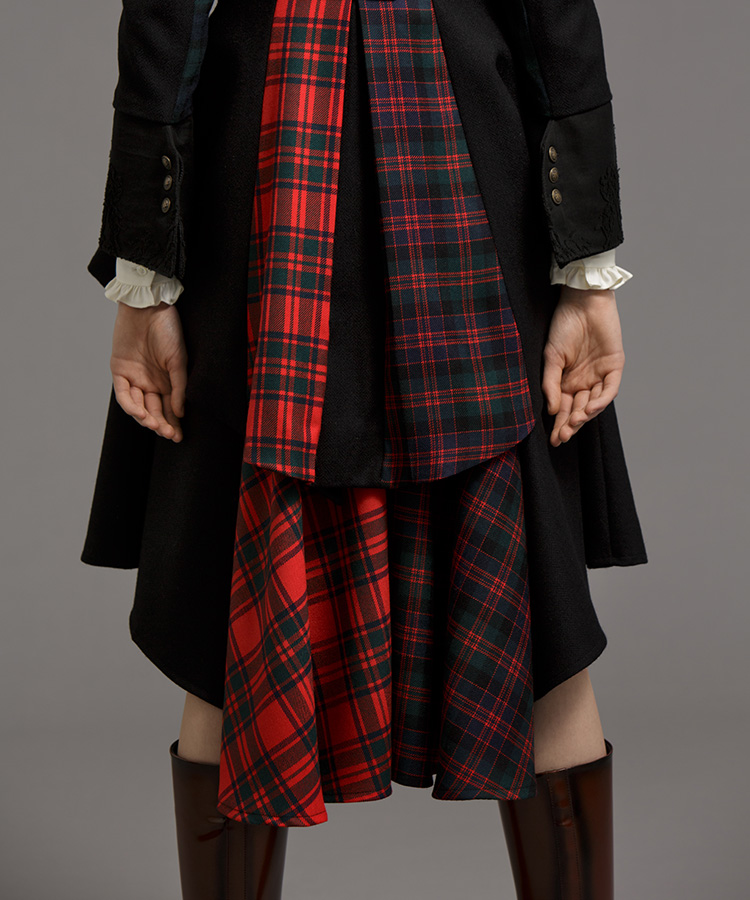
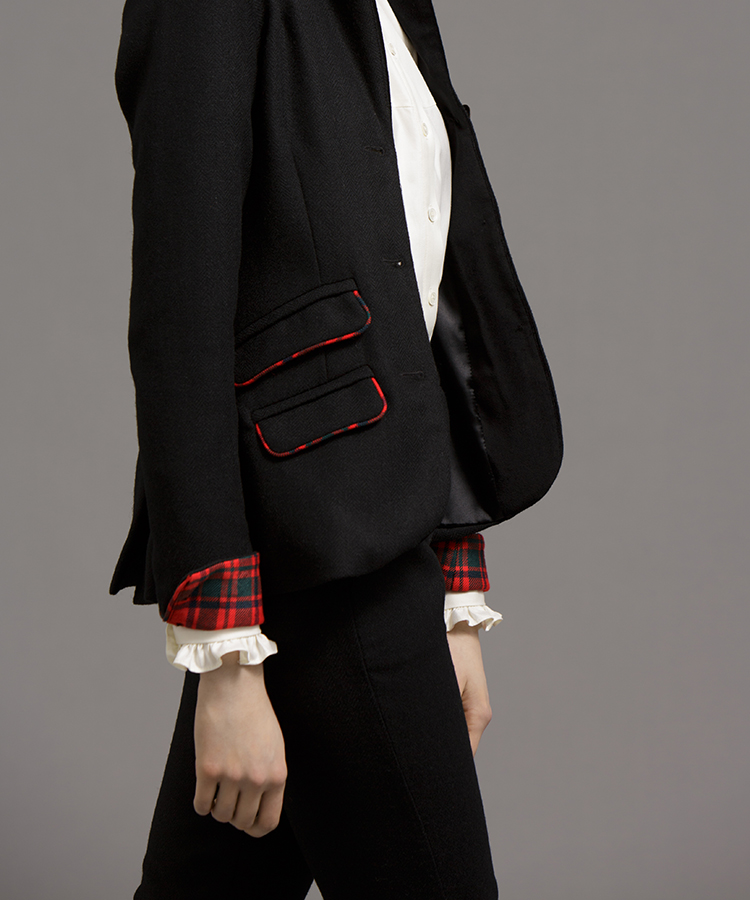
Another significant museum piece: a tartan coat and swing skirt by contemporary Scottish designer Judy R Clark, who began her career working for Alexander McQueen and who was recently on the wardrobe team for Taylor Swift’s Edinburgh stadium shows. Those two pieces from her Regency Collection, which she still makes to order, were bought by the Kelvingrove Art Gallery and Museum in 2016. “They combine tweed with panels of MacDonald and Robertson tartans,” she explains. “They represent my family heritage, incorporating both of my grandmothers’ maiden names, weaving personal history into traditional craftsmanship.”
A new wave of designers has created tartans to define their aesthetic, and it’s usually autobiographical. Scottish-Jamaican Nicholas Daley registered his tartan in 2022 and has used a new iteration of it extensively in his current menswear collection, which includes coats, bomber jackets, overshirts and hoodies. It’s profound, in its way: the green, black and gold draw a line straight to his Caribbean heritage with nuance and elegance. “Tartan carries centuries of history, but can be continually reinterpreted,” observes Daley. “I’ve been exploring it across different materials and contexts, including my recent knitwear with Lyle & Scott.”
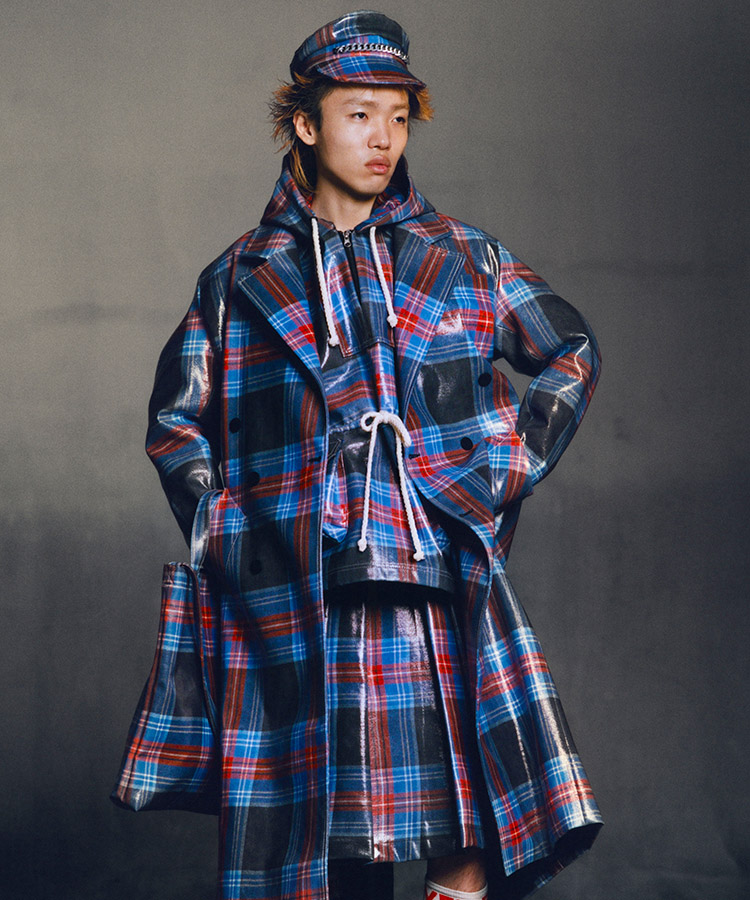
If Vivienne Westwood and Jean Paul Gaultier were the late-20th-century tartan rebels, then Charles Jeffrey is the plaid protagonist of the 2020s. His London Fashion Week shows are spectacles, and he marked 10 years of his label last year with a retrospective at Somerset House. Among the exhibits were numerous tartan looks, using the plaid that was based on the makeup he used to daub his face with when he hosted his club night, Loverboy, in East London. “I found a photo of me with a blue face, a red dot, and a white streak,” he recalls. “It was a look inspired by a Joan Miró painting and seemed apt to create a tartan from the character I had created.”
Since registering his tartan in 2018, it’s become a staple in his collections, but he continually toys with it: “We’ve done it with a Lurex yarn and also as a shadow, which made it look like a still from a black-and-white movie. We did an X-ray one, and a fur version. My next collection is about Scottish romanticism, so it’s coming back around again.” For Jeffrey, it’s about emphasising his design DNA as a Scottish designer in London with an international following. “I wanted to establish a design language early on,” he notes. “Westwood, Comme and McQueen always had house fabrics that you can recognise. As a brand, you have to tell people who you are.”
And what is fashion about, if it doesn’t create a clan you want to be a part of?