Are there any happier words in the French language than boulangerie, crémerie and fromagerie? Driving from Annecy towards the Aravis mountains, they appear with increasing frequency, conjuring crackling-fresh baguettes, straw-coloured butter and plump, ripe cheeses. Outside La Laiterie in Annecy-le-Vieux, a sweating man in a faded red T-shirt emerges, two bulging bags of Savoyard specialities wedged beneath his arms. Beyond him lie stone barns, hay meadows, rainbow-striped beehives and roadside signs for Reblochon, the washed-rind mountain cheese that melts into the Haute-Savoie’s signature tartiflette.
It’s a hot day, the crimson geraniums in the window boxes of timber-framed houses almost vibrating in the gentian-yellow sun. As the road climbs beyond Le Grand-Bornand to its higher hamlet of Le Chinaillon, the air cools another notch. Here, family-run hotels such as Hotel Chalet Les Cimes provide access to the ski lifts and mountain trails, squadrons of swallows skimming past the carved wooden balconies.
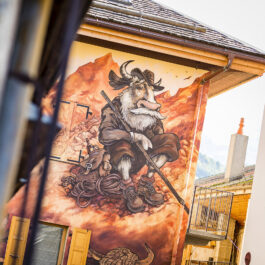
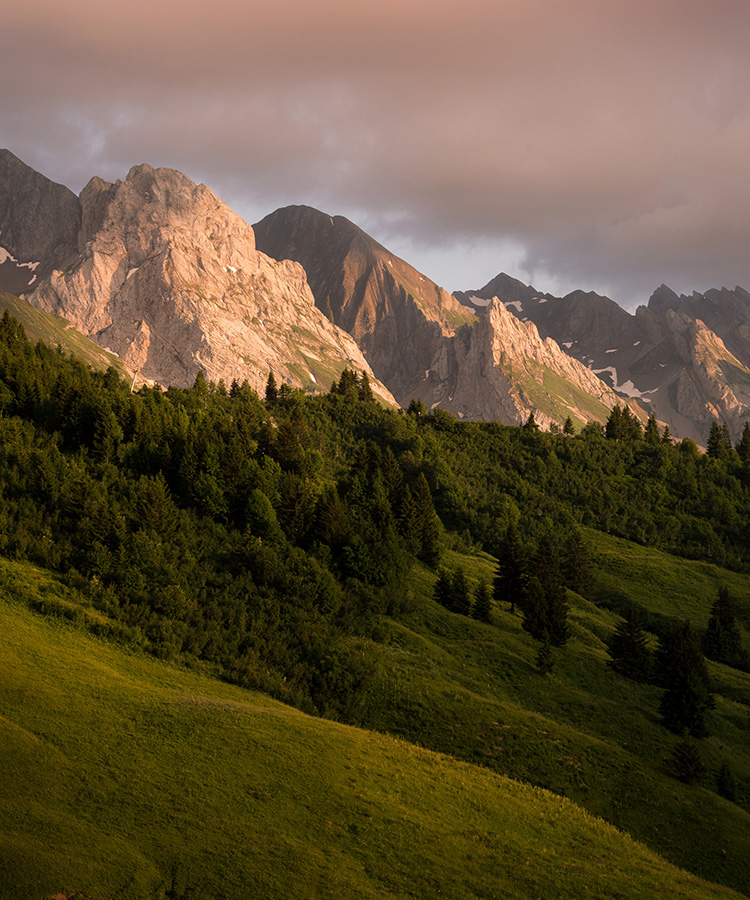
Together, the two communities encompass more than 400 historic chalets tucked beneath the jagged limestone peaks of the Aravis. A distinctive onion-domed church anchors the historic centre, where a turn down one lane reveals a centuries-old farmhouse and another a droll splash of contemporary wall art.
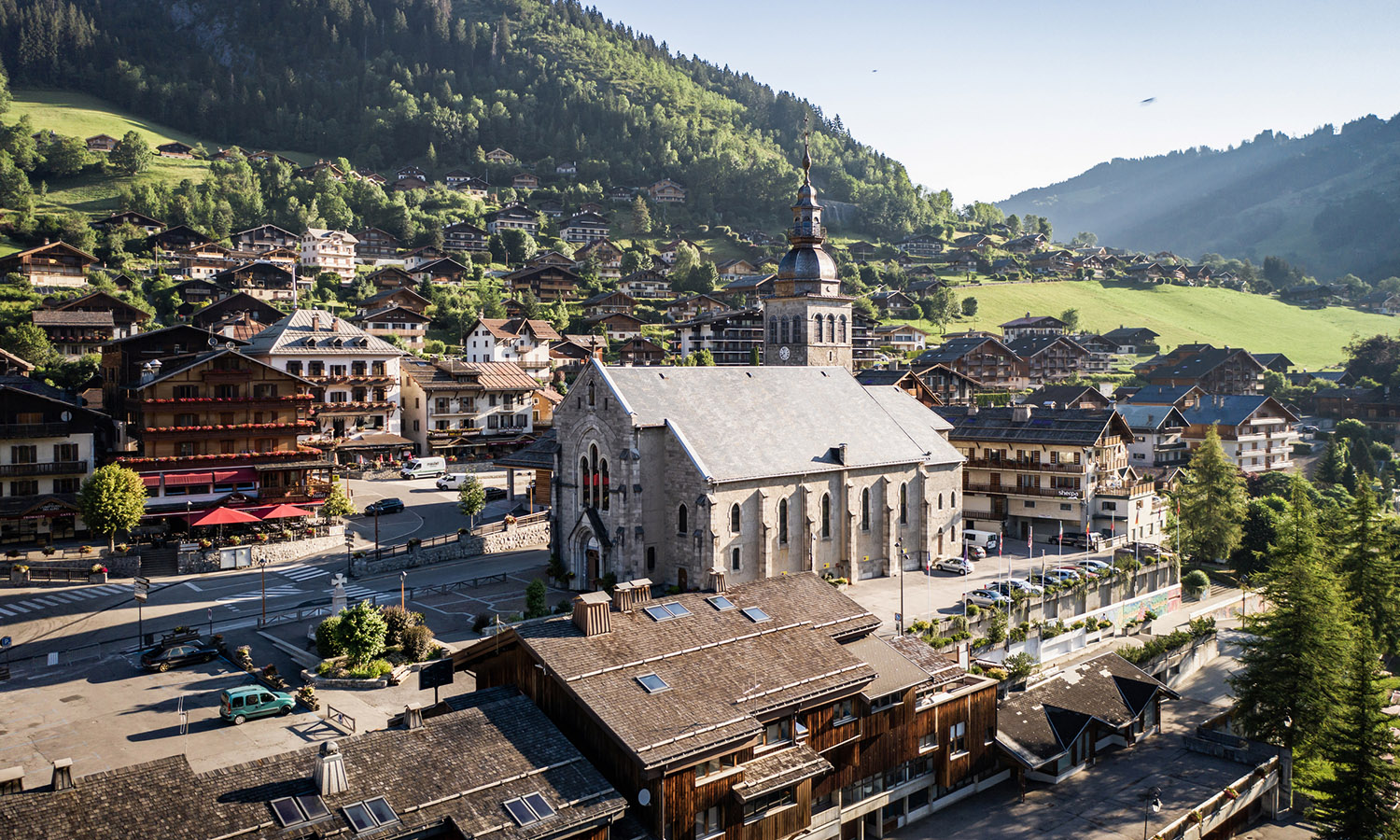
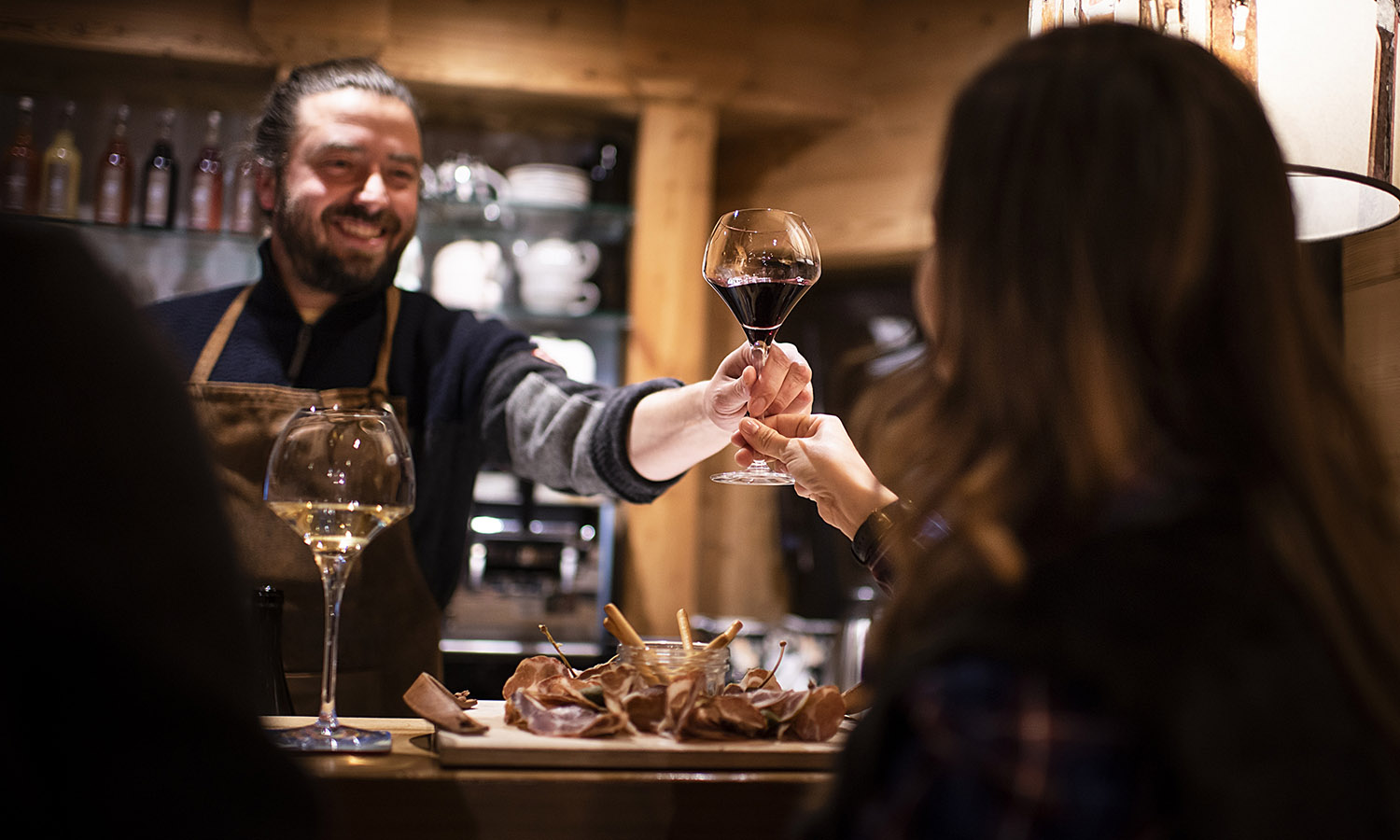
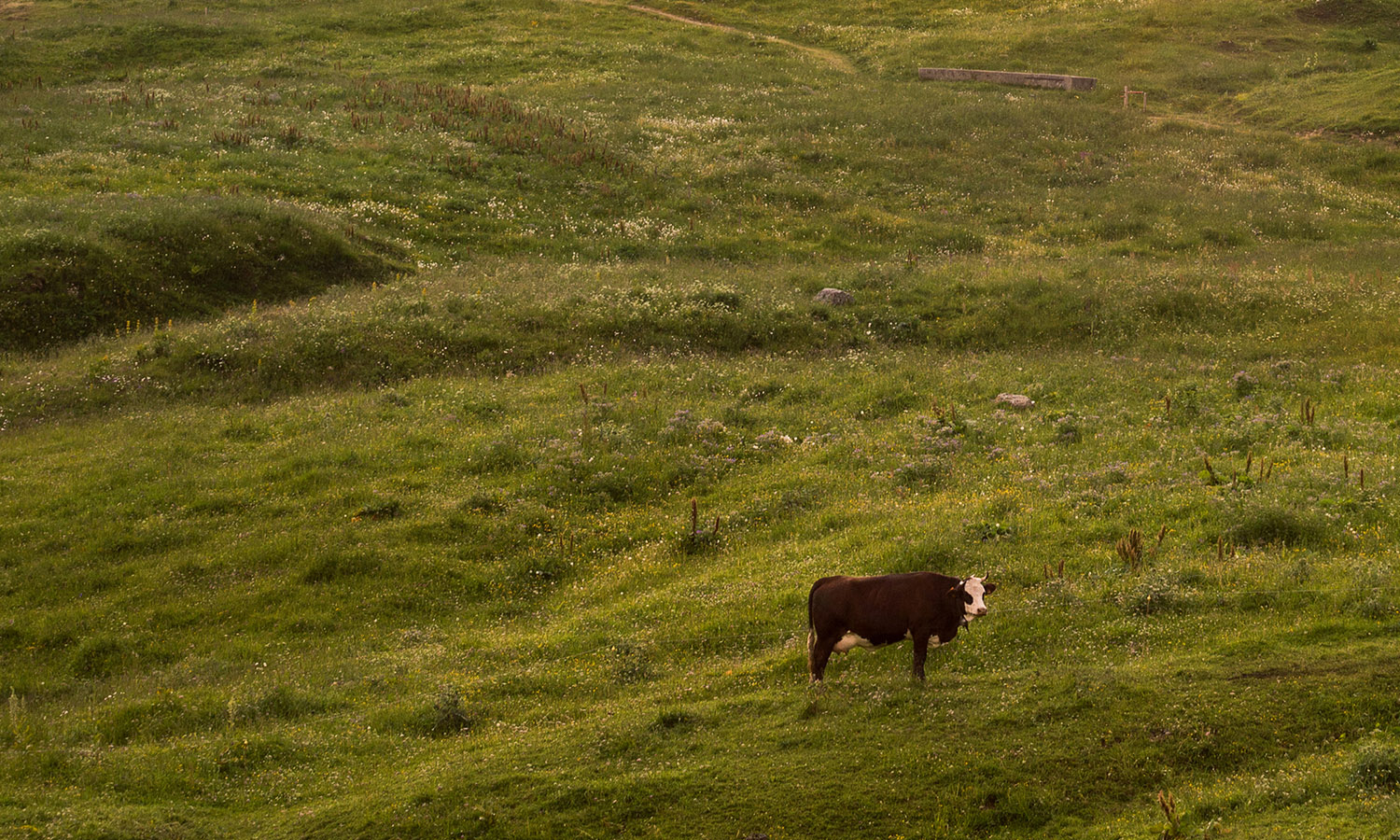
Le Grand-Bornand isn’t simply a mountain resort. Unlike many Alpine valleys, where tourism has gradually eclipsed agriculture, the Aravis remains a genuinely working landscape. Each spring, Abondance, Tarine and Montbéliarde cattle are driven to the high pastures before returning to the valley in autumn, a practice that has underpinned Reblochon production since the 13th century.
Thirty-five Reblochon farms still operate here, their 2,000 dairy cows matching the village’s human population. Counter to rural trends, the community – and its farmers – remain defiantly youthful, with a median age of 40.
One is Stéphanie Chassagne, who greets us on the 1,723m Col des Annes, where she and her husband Xavier Jacquard run the GAEC d’Hermy farm each summer. Open-faced and generous, Chassagne introduces her world as we crunch across the sun-bleached gravel. “My neighbours,” she says, nodding towards a nearby farmhouse. A few steps later: “My herd.” Below us, Abondance cattle graze the hillside. Then, with a sweep of her arm towards the stegosaurus skyline: “My mountain pasture.” Stooping, she plucks a handful of wild thyme, crushing it beneath my nose.
For Chassagne, the flavour begins here. Throughout summer, the cows graze among the abundant Alpine wildflowers; in winter they feed on hay harvested within the Reblochon zone. Even neighbouring farms produce different cheeses because no two meadows are the same.
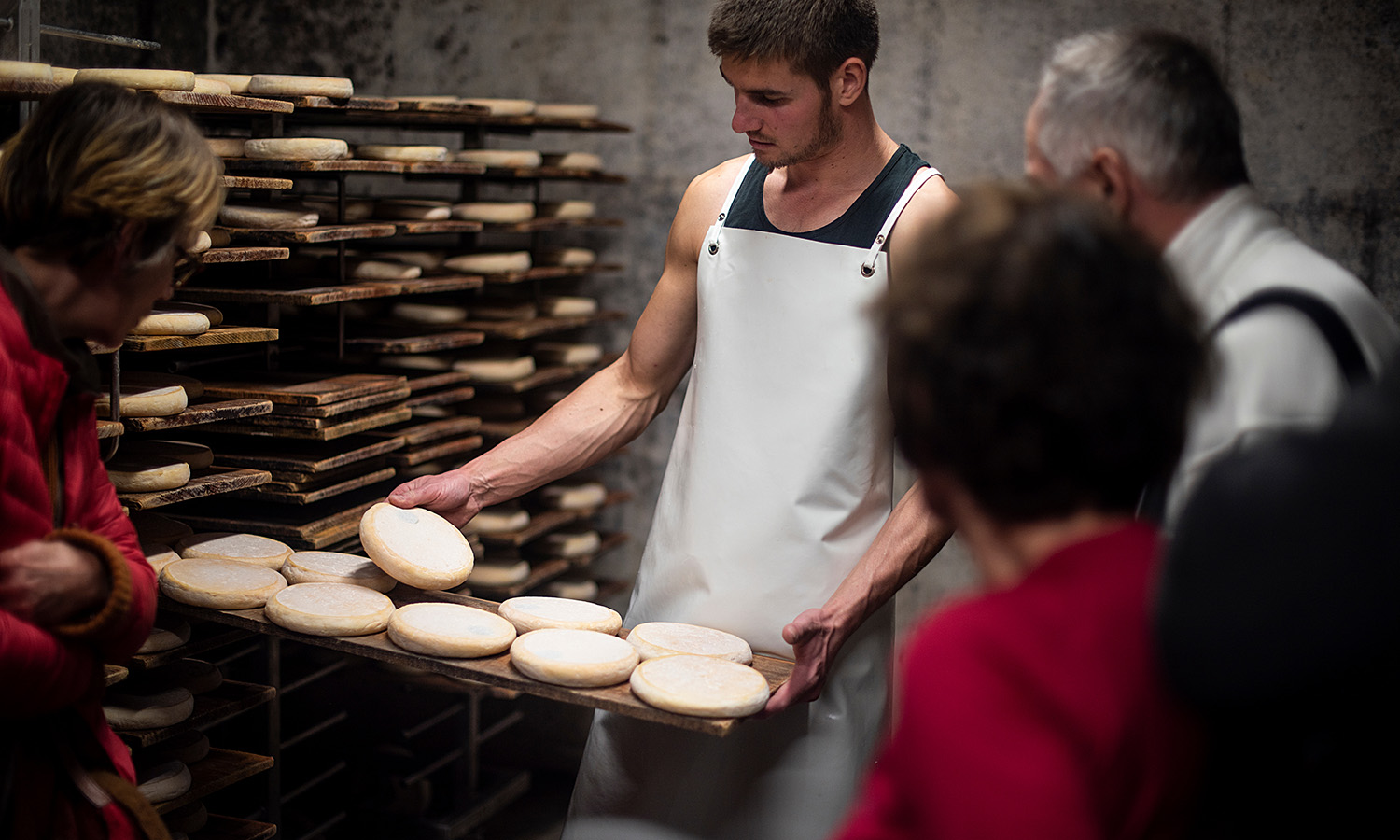
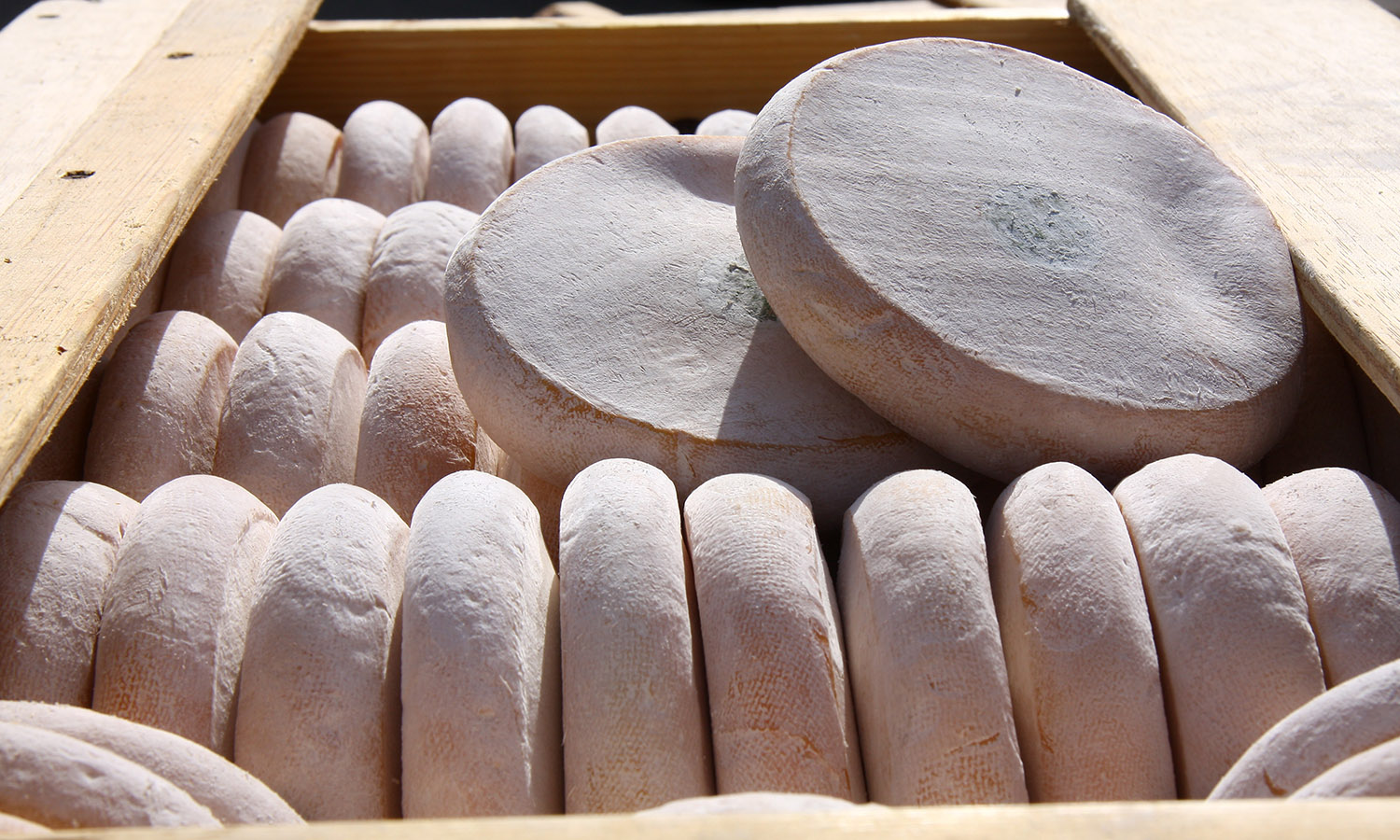
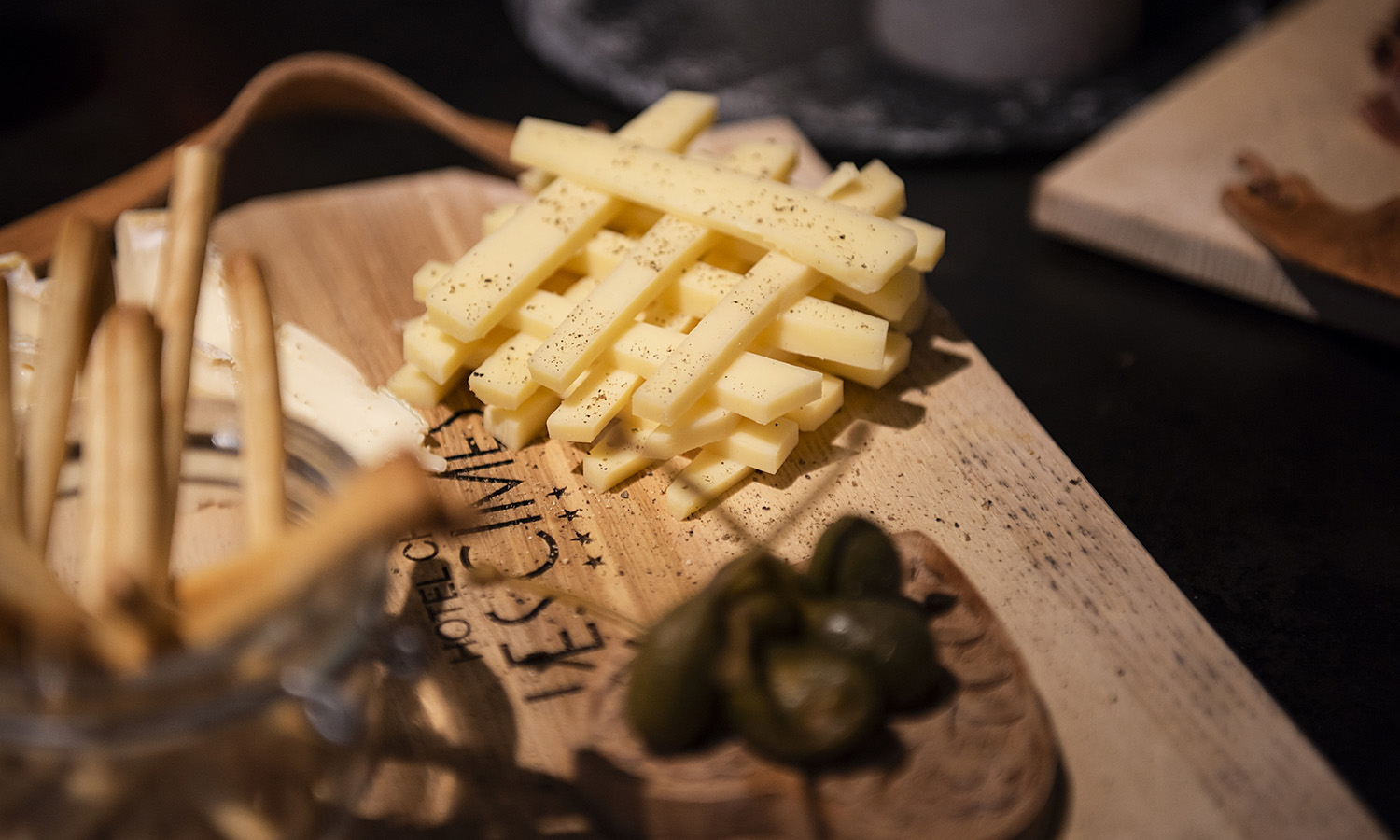
The family milks twice daily, producing farmhouse Reblochon identified by its green casein disc. Milk flows straight into the fromagerie, where curds are cut, moulded, pressed and hand-salted before maturing for three weeks on local fir. Summer production reaches around 500 Reblochons a day, with work beginning at 4 am and rarely finishing before 11 pm. “It’s not easy when we have friends who want to go for a drink,” Chassagne admits. Even her 75-year-old mother-in-law still works alongside the family.
“Non!” Chassagne laughs when we remark how strong her relative must be. “She is broken from all the work!”
But the result is astonishing: creamy and supple, their Reblochon tastes less of the dairy than of the flower-filled meadows outside. And, for all its demands, Chassagne wouldn’t swap this life. She and Jacquard are raising five children on the farm, and all already talk about becoming farmers.
Back in the village, my guide, Marion, explains why so many young people choose to stay. “People my age remain, or come back,” she says. “The ski resort and Reblochon make this place professionally attractive, and many of our farmers are young, so agriculture still has a future.”
The evidence is everywhere. At Aux Comptoirs des Alpes deli, shelves hold only speciality regional produce rather than supermarket brands. Contemporary murals and sculptures of “cow art” lend the historic streets an unexpected creative edge, while in summer, down on the banks of the Borne, L’Esperluette – a guinguette run by DJ-turned-restaurateur Justin Losserand and chef Margaux Cohendet – reimagines local ingredients in fresh modern cuisine.
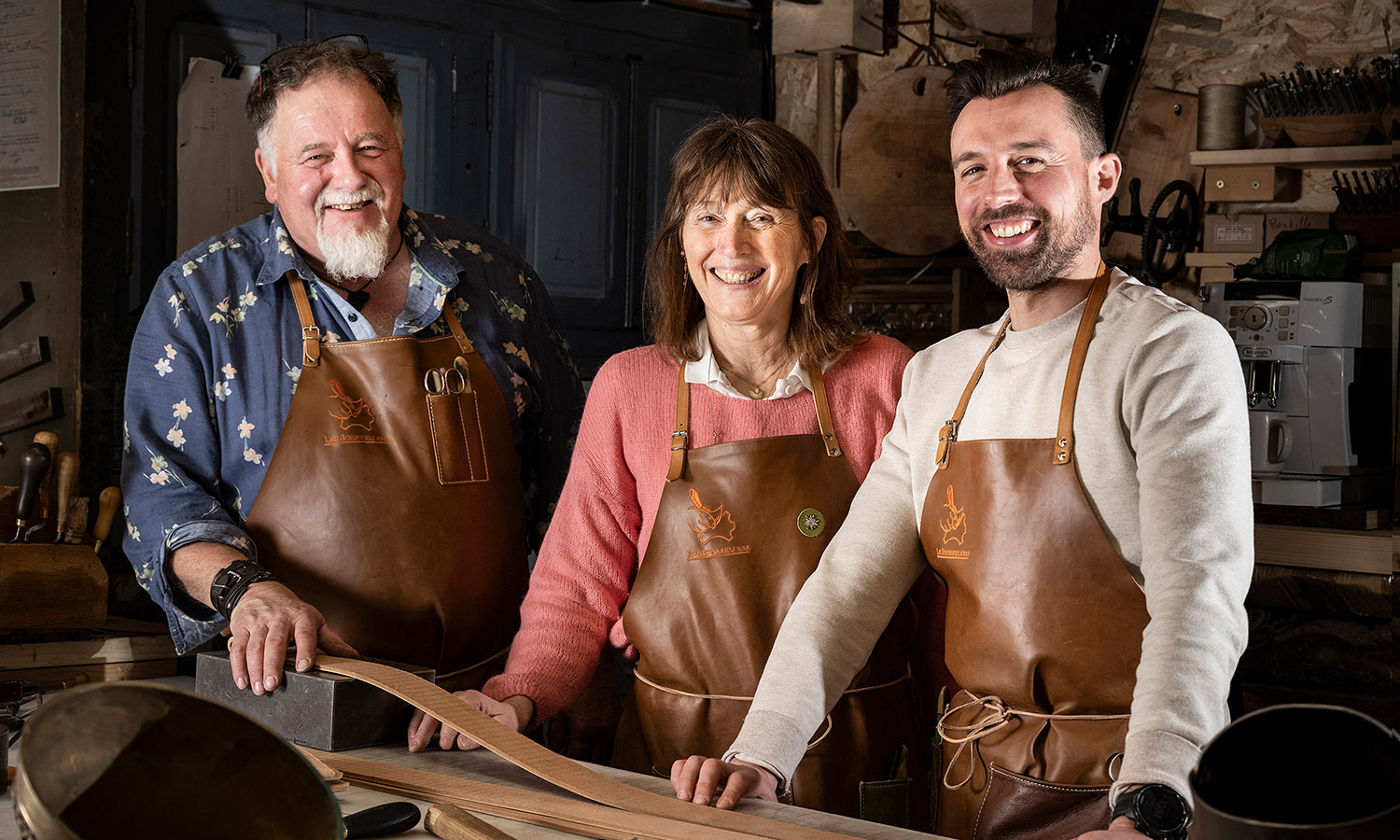
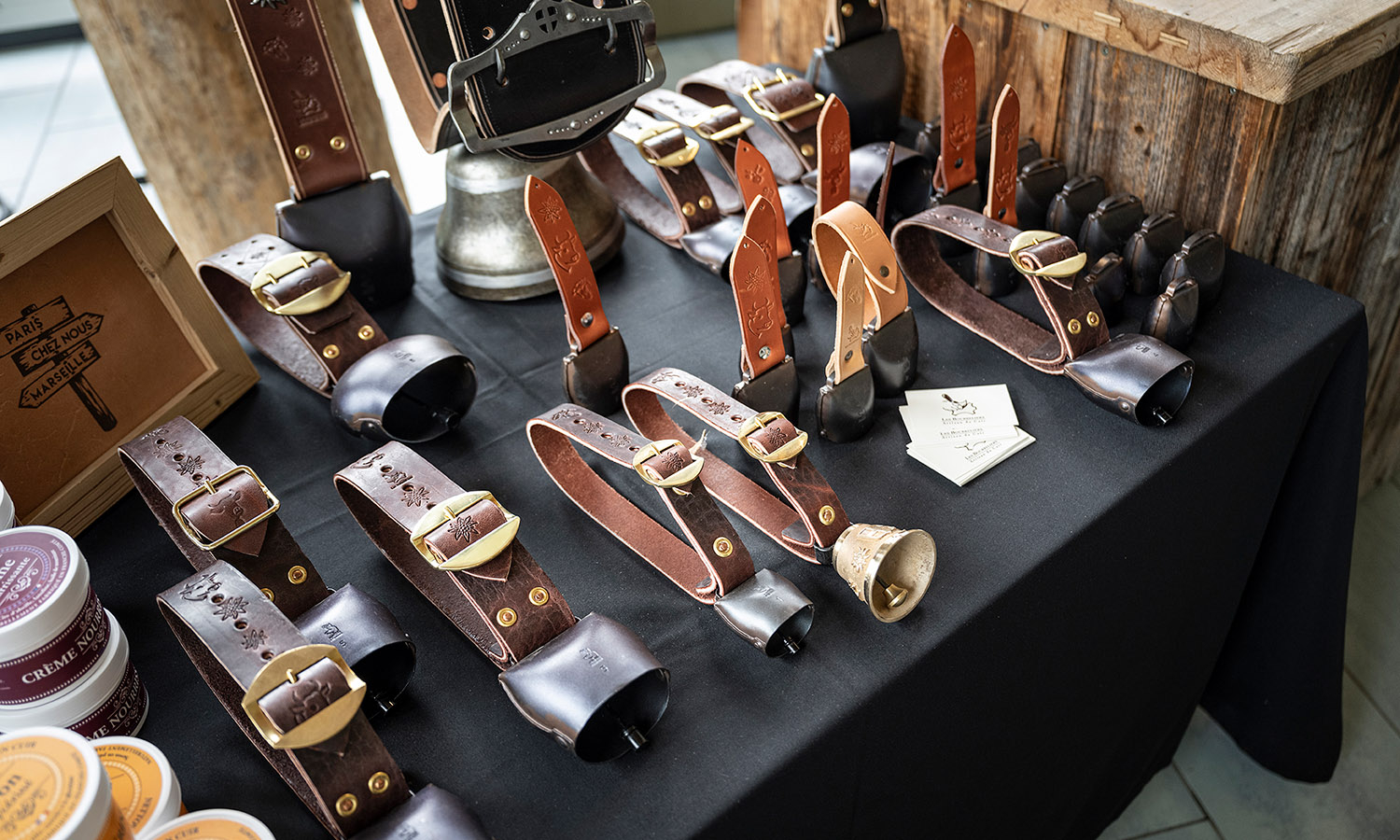
At Les Bourreliers, founded in 1930, we meet Kevin Zaletka, who studied tourism abroad before returning home to learn leatherworking from master craftsman Didier Perrillat-Monet. Today, at age 36, he helps run the leather crafts store and workshop, set in a historic farmhouse close to the village centre.
Around half of Les Bourreliers’ trade still comes from local farmers, alongside visitors seeking bespoke leather goods. As we talk, a twentysomething woman arrives with a well-worn saddle for repair. “Young people are returning to handmade crafts … this is the mood,” asserts Zaletka, leading us into the low-ceilinged workshop in the old cow barn, where an 1850s sewing machine from Leicester still earns its keep beside a modern laser engraver. “We mix it. Didier taught me the traditional method, and I brought the contemporary, so now we can do everything and feel confident about the future.”
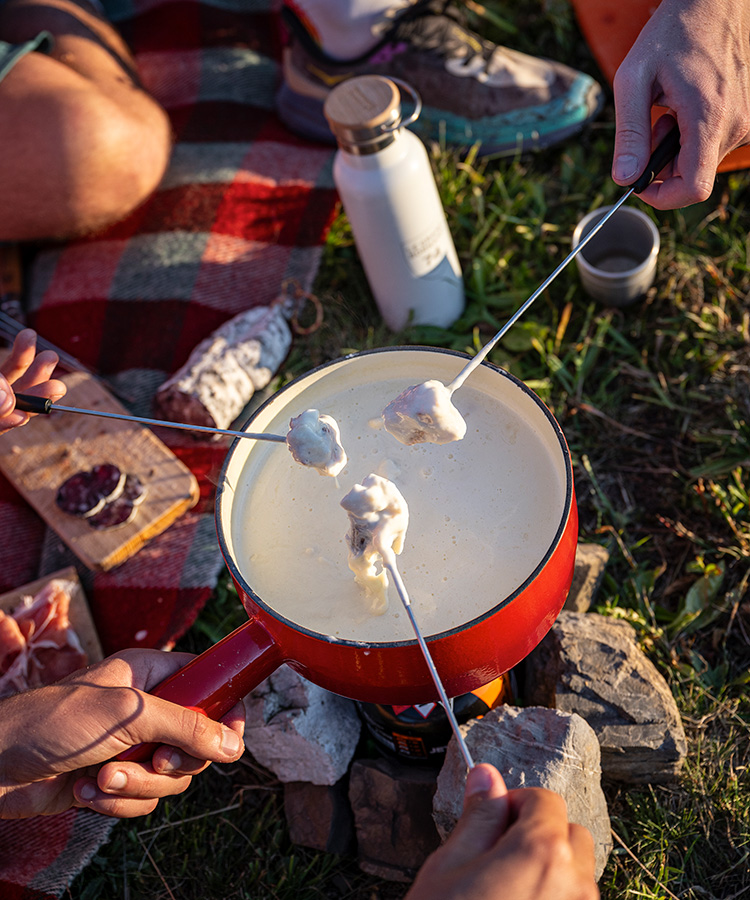
Later, back on Col des Annes, we sit down to a different kind of bounty: a fondue picnic laid on a red gingham cloth among the wildflowers. A wheel of Reblochon melts lazily in its caquelon while the limestone peaks of the Aravis glow in the lowering sun. In the distance, cattle dogs gather the d’Hermy herd for the evening milking. “It’s a cheese of the mountains,” Chassagne had told me earlier. “And it must stay in the mountains.”
Share with your friends