France says apéro. Italy says aperitivo. Somewhere between the two, an entire continent decided the best way to start dinner was to postpone it slightly, with a glass in hand.
While the French lean toward good wine and better bread, the Italians prefer bitter liqueurs and a cutting board’s worth of charcuterie. Both, however, are chasing the same golden-hour ritual, perfect for winding down before winding up the appetite. It’s not quite cocktail hour and not yet a meal, but rather the good parts of each stretched out over relaxed conversation. Here’s how to experience (and host) your own this summer – no flight to Paris or Milan required.
The Setting
Repeat after us: the setting is everything. For an authentic apero/aperitivo, one would normally seek out a pleasing alfresco spot, such as a leafy bar terrace or a streetside cafe where you can watch the city bustle by. Since we’re doing this at home, however, a balcony, terrace or even a shared garden space is perfect. If nothing is available, simply move a small table-and-chair set over to the largest window in your home, and open it to let the fresh air in.
Next, add a few welcoming details: drape a throw over a chair, group a set of candles together, keep a pot of basil within reach. As the sun starts to set, skip the overhead light and switch to a few lanterns tucked into the corners.
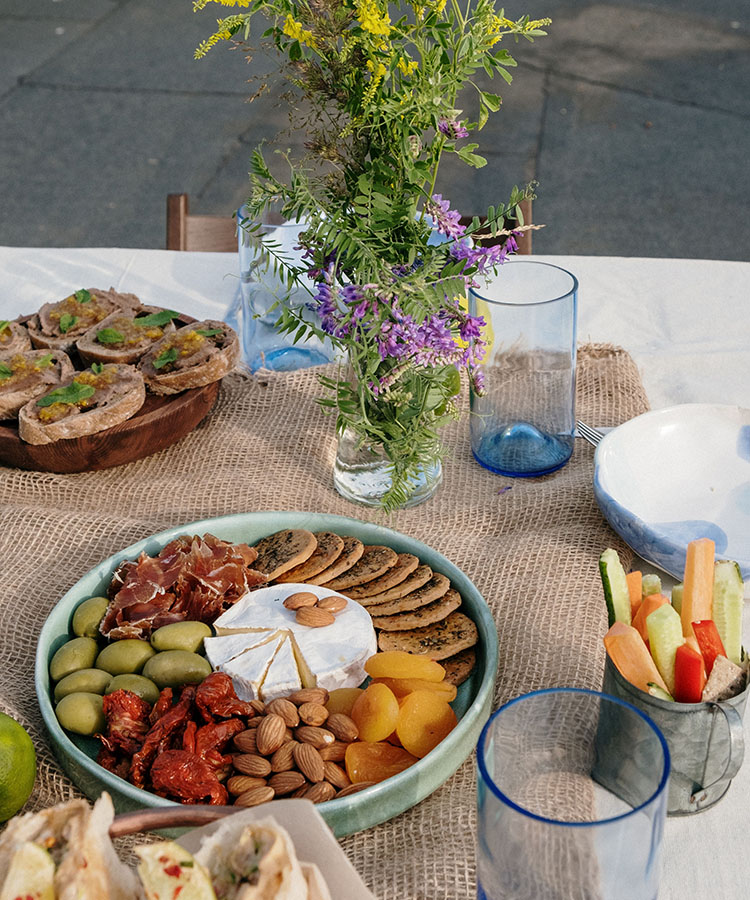
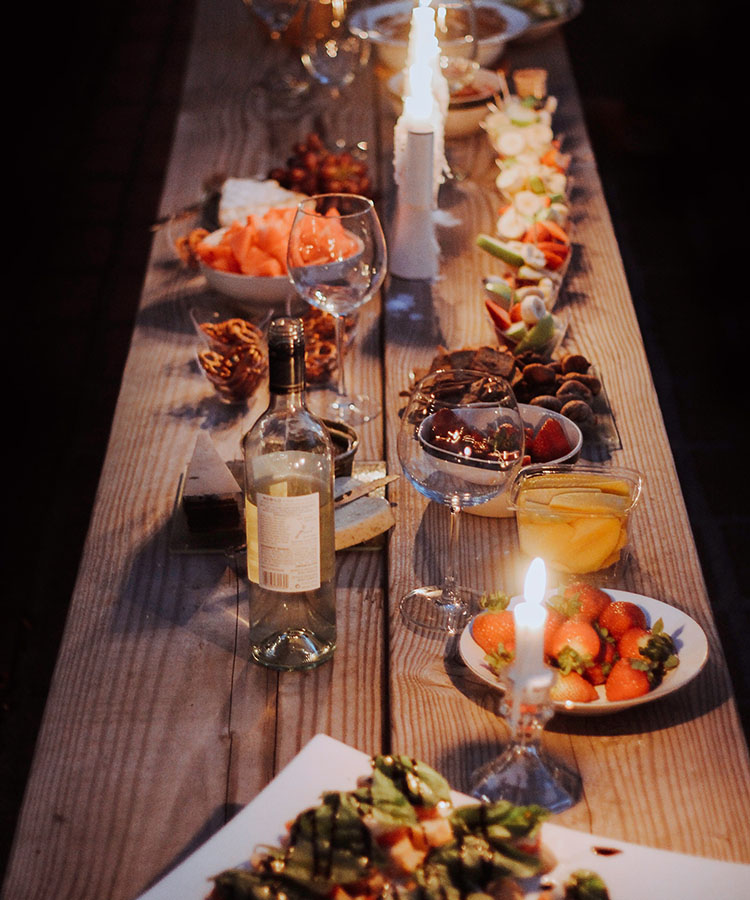
For decoration, stick to natural materials where you can – terracotta pots, linen or cotton blankets, worn wood surfaces, ceramic plates – which elevate the ambience with minimal effort, and hold up well outdoors. Don’t over-style it, though. Both the French and the Italians treat outdoor living as ordinary, nothing too precious, so leave room for someone to move a chair or reach past a bowl without worrying they’ve ruined the aesthetic.
Long before anyone tastes anything, the other senses are already doing their part. Music should set a rhythm without demanding attention: jazz, bossa nova, or contemporary acoustic playlists work particularly well because they support conversation rather than competing with it. When it comes to scent, natural aromas like rosemary, basil, jasmine and citrus become part of the environment, unlike artificial scents that sit on top of it. And as daylight fades, lighting takes over. Candles remain the gold standard, not only because they’re warm and flattering, but because the flicker creates a sense of movement and depth.
The Tablescape
An aperitif spread isn’t a seated dinner, so don’t set it like one. Let people stand, lean, refill their own glass, and go back for more snacks. The table needs to hold its own against that kind of movement. So, one linen tablecloth, candles and a couple of good ceramic bowls or plates are really enough.
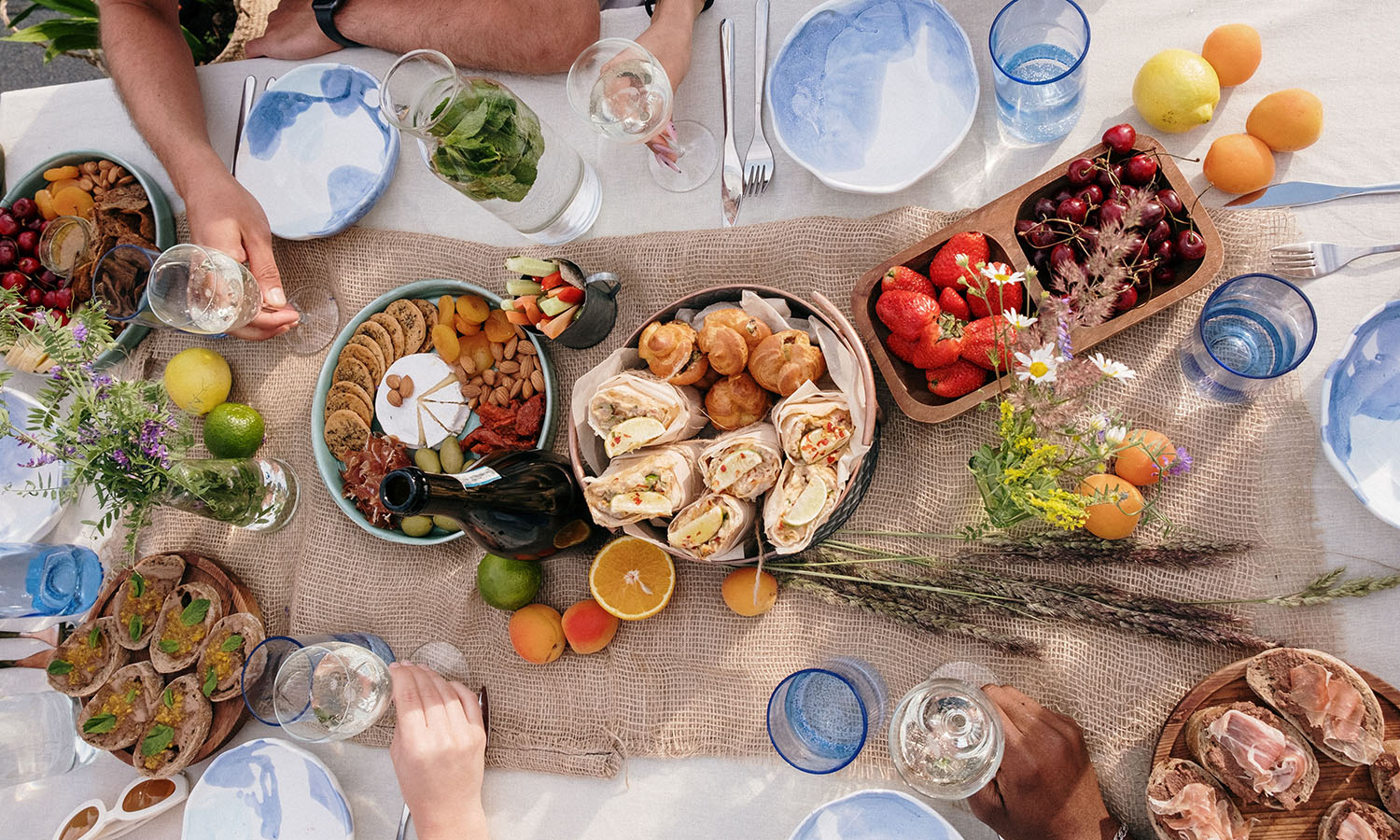
When it comes to glassware, it’s worth putting in a little more thought than people expect. A cheap tumbler makes even good wine taste like an afterthought, while a properly weighted glass – something with a bit of colour to it, or a hand-blown wobble – makes even sparkling water feel like an occasion.
Last but not least, skip the flower arrangement. A few clipped olive branches, rosemary stems or freshly cut herbs give fragrance and texture to the look and reinforce the connection between the table and its surroundings.
The Menu
Nobody’s cooking a real meal here, and that’s the point. In France, the go-to is minimal: a freshly sliced baguette, pâté, flaky salt, crudités, a sharp vinaigrette and perhaps a local cheese or two. Italy takes a punchier approach with thinly sliced cured meats and prosciutto, marinated anchovies or olives, roasted nuts, bruschetta, a wedge of aged Italian cheese and a handful of grissini breadsticks standing up in a jar. Include seasonal fruit or veggies to create more visual interest through colour and texture.
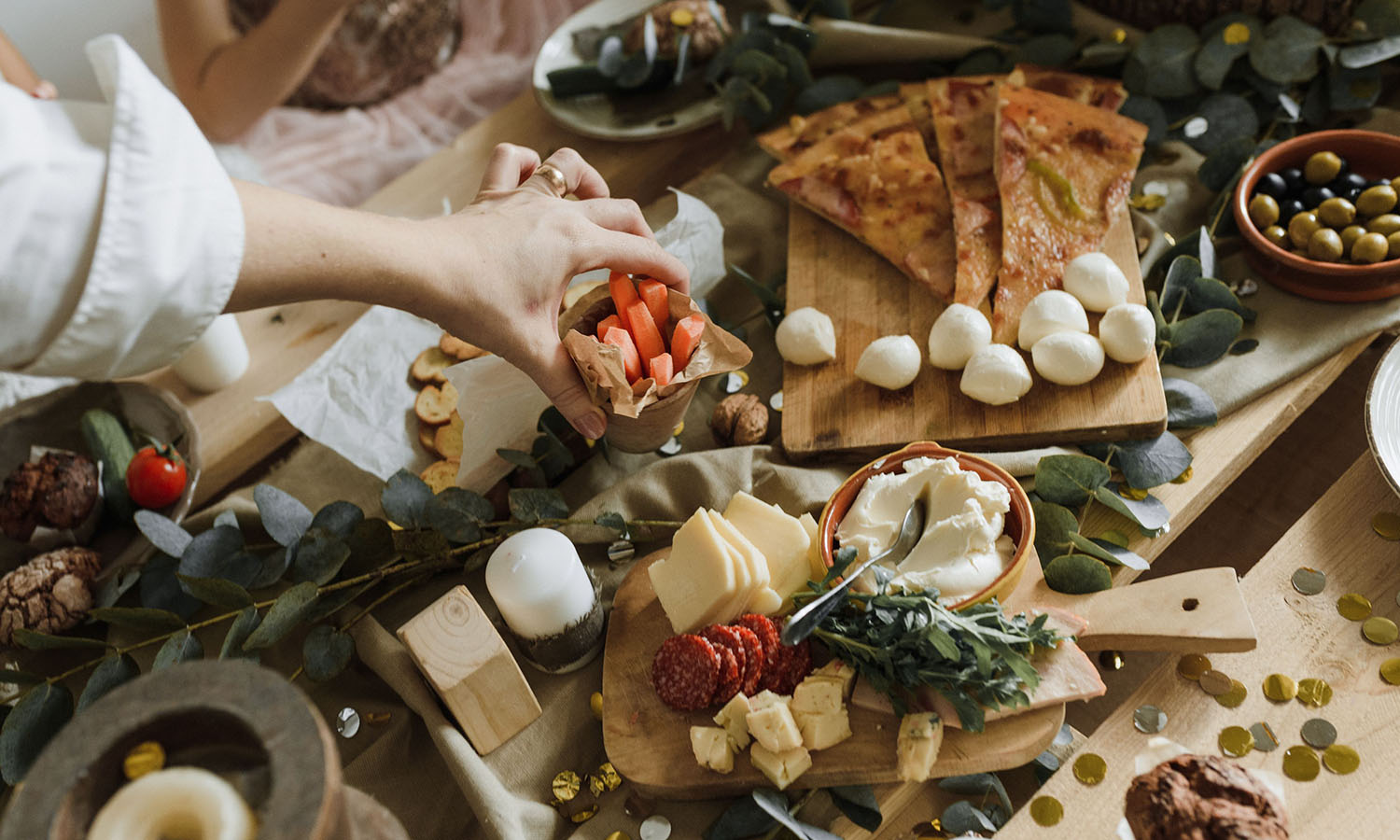
Whichever menu you go for, the aperitivo food is meant to slow people down between sips, not to fill anyone up. A good wooden serving board does double duty here – it holds the whole spread together, and it means fewer dishes to wash afterwards.
The Signature Drink
No element is more important in an aperitivo than the drink. After all, it’s the spirit of the evening – quite literally. Traditionally, aperitifs were chosen for their bittersweet qualities believed to stimulate the appetite before a meal. Today, however, the signature drink serves a broader purpose, acting as an anchor for the gathering and a ritual that signals the transition from work to leisure.
The spritz is the easiest place to start, and there’s a reason it’s so popular: it’s bitter, bubbly and very low effort. For a classic Italian with a twist, a Venetian spritz keeps it simple with sparkling wine, a bitter liqueur (like Aperol, Campari or Select), a splash of soda and green olive garnish to give it a whole new character. If you want something more elegant, a white negroni swaps Campari for Suze, the French gentian liqueur, and sweet vermouth for Lillet Blanc, creating a lighter, more floral take on the classic. Or, for a non-alcoholic option, sparkling tonic with pink grapefruit, rosemary and plenty of ice captures the spirit of aperitivo just as well.
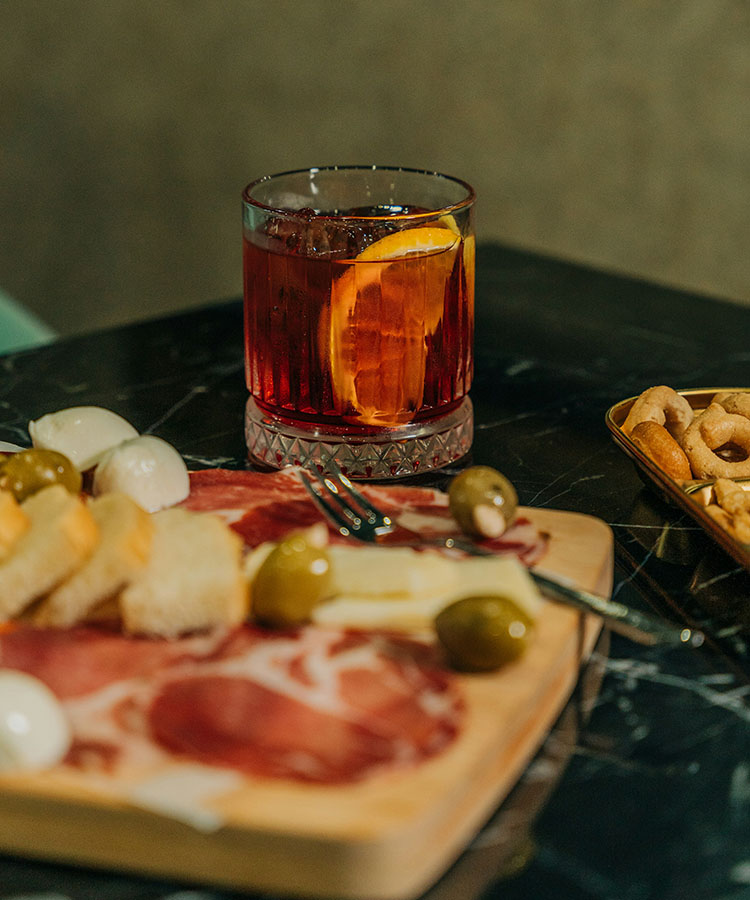
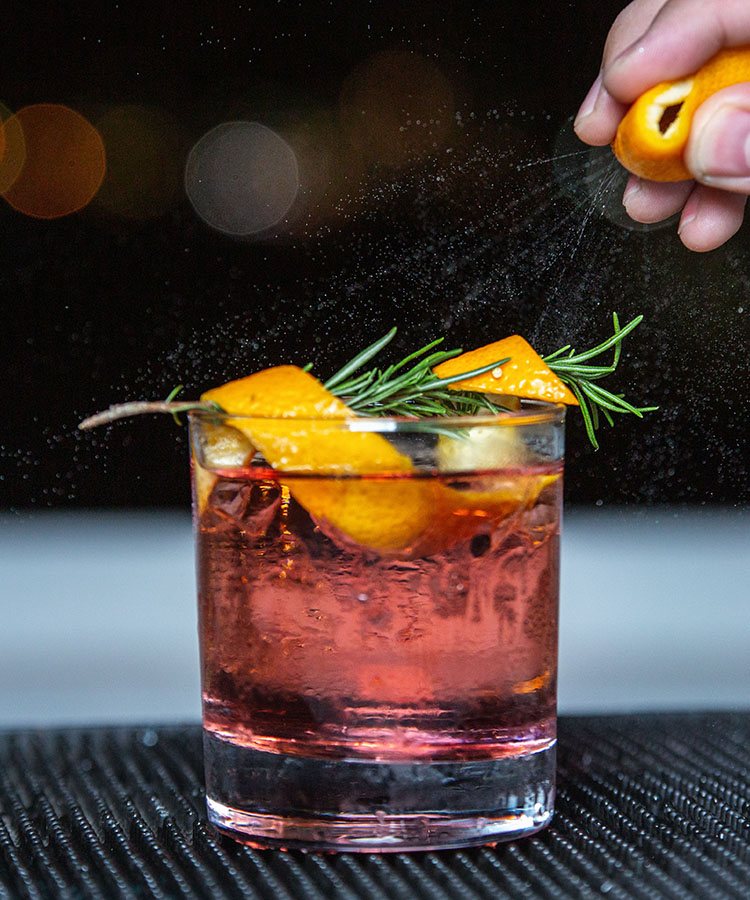
Either way, your signature drink options are endless, showing how flexible and low-maintenance this part of the evening can be. Pick whichever fits your style, and let guests build their own from there: have a bowl of ice, a tray of citrus slices, fresh herbs and a few bottles within reach. Letting them take part is really the point, as aperitivo is never meant to be stiff or strictly planned, just savoured.
In the end, aperitif isn’t defined by Campari, Vermouth or perfectly arranged olives. It’s the habit of slowing down before the evening begins, watching the light change with a drink in hand, surrounded by good company. Whether your view is a Tuscan piazza, a buzzing city balcony or your own back garden, it’s a tradition well worth borrowing.