No matter how uncomfortable it feels, over time, I had to come to terms with the fact that some things in life can’t be explained rationally. Like when the right book finds its way into your hands with perfect timing, or you receive a random act of kindness on the day you most need it. Or when a person you just thought about contacts you out of the blue.
Tango Argentino is one of those things.
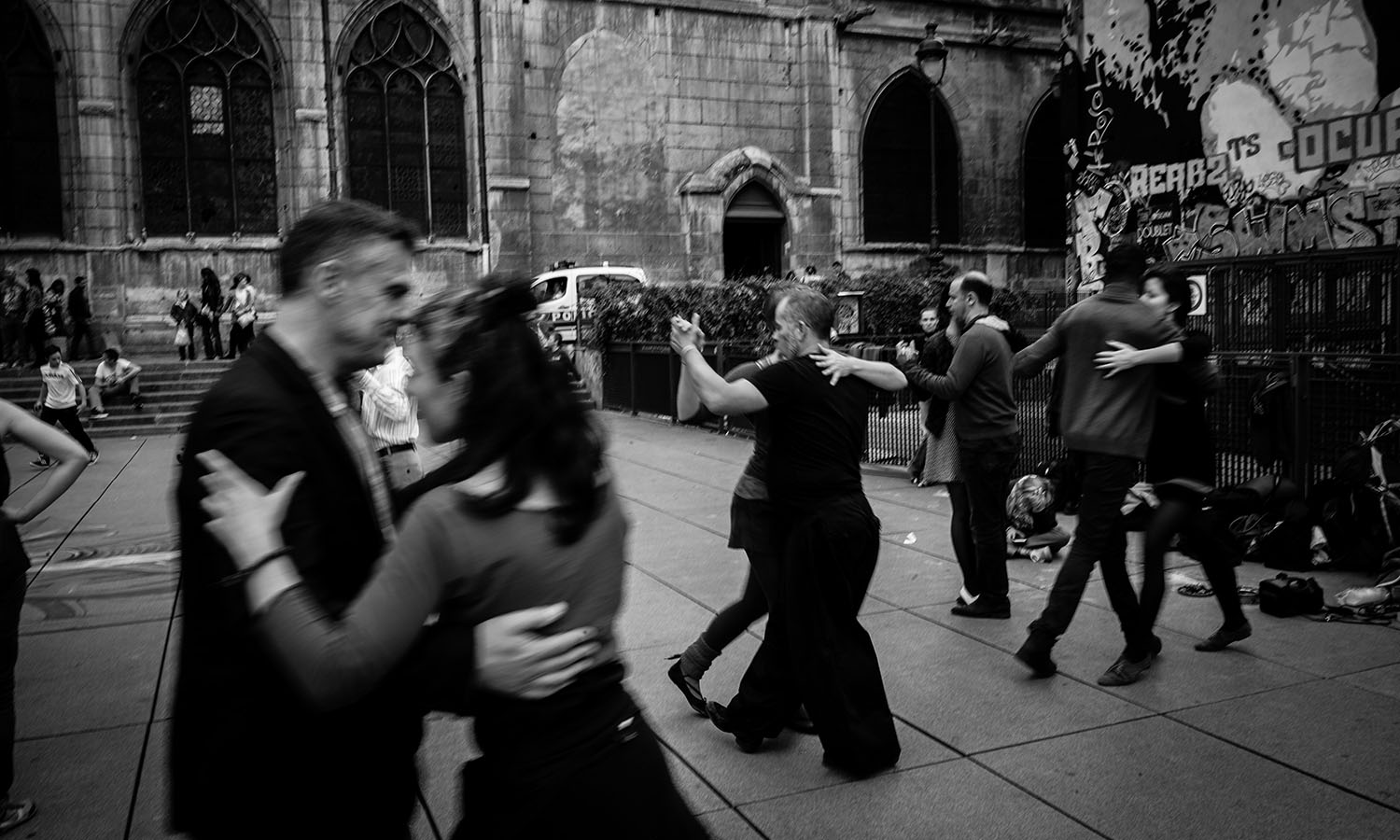
First, it teleports you into a magical, sensual atmosphere. From the first moment you see it, the dance is simply mesmerising. The rhythm and syncopated moves envelop the viewer as if in a dream. At the same time, it exudes elegance, excitement and a distinct pride that make it all the more mysterious. Above all, tango differs from many other dances in that it doesn’t consist of a cyclic repetition of steps. The Argentine tango is pure improvisation, which makes it all the more intriguing.
I just had to try to get to the essence of this irresistible dance and experience its fantastic, electric world firsthand. But would I ever be able to move in the same way?
Learning To Slide
First things first: tango classes aren’t just for couples. Plenty of people (of all genders) join a class on their own and find a partner to practice with once there, so don’t be discouraged if you wish to try on your own. In fact, even if you go with your partner, the instructors will routinely have you dance with someone else – you will soon discover why.
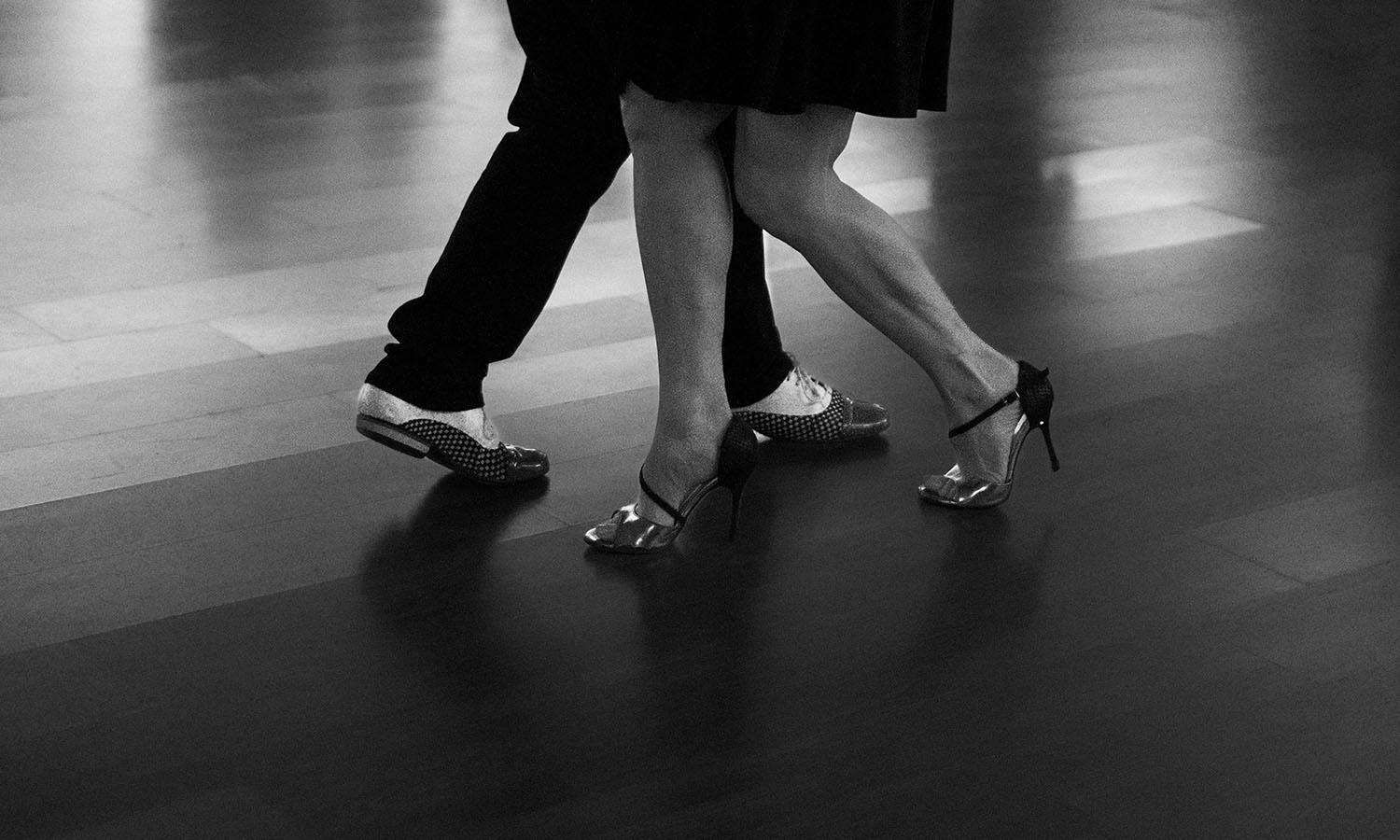
Second, there is no need to wear heels. Any shoes that slide well on a ballroom floor will do, even ballet flats or loafers, as long as the sole is not too thick. That’s because tangueros need to keep a feeling for the floor under their feet. In general, I recommend avoiding heels unless you are very comfortable in them, lest you find yourself in pain in the middle of a lesson (ahem).
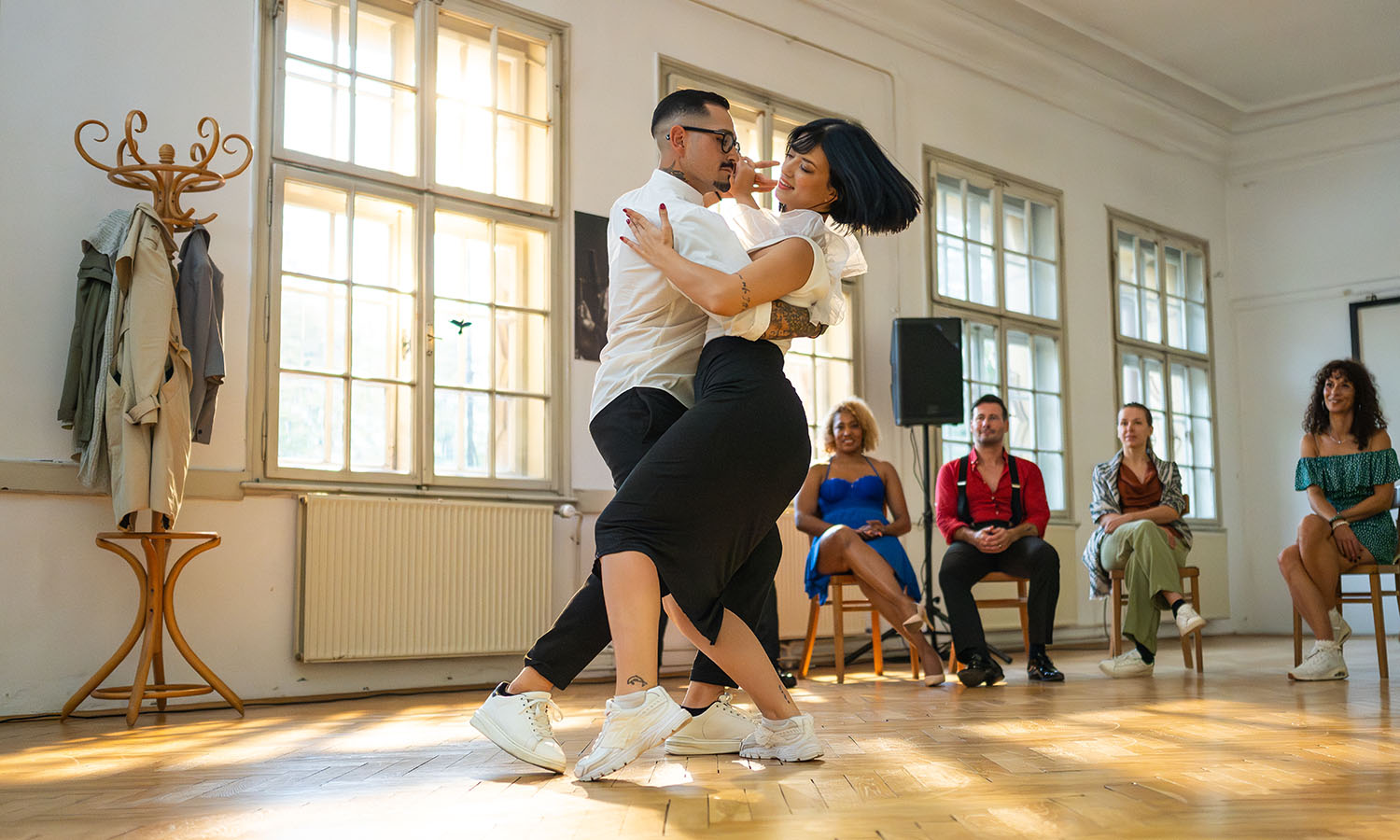
Third, no matter who you end up dancing with, keep in mind that “tango is sensual, not necessarily sexual,” says Lia Nanni, the tango instructor extraordinaire at Paris’s Centre de Danse du Marais dance school. “Be elegant, noble and proud when you dance,” she adds.
We start by practising the base step in front of the mirror – feet together, heels touching. As a lady, therefore traditionally a follower in Argentine tango, I need to take a step forward with my left foot, on the same line as my other foot, followed by the right foot sliding weightlessly on the floor. Next, I make a sidestep with my right foot, followed by the left in the same slide-drag fashion. Then, my left foot goes one step backwards, and my right foot takes another step back. Sounds easy, right? Perhaps. Yet managing to execute it elegantly while maintaining good posture is harder than it seems, even in front of the mirror.
It Really Takes Two…
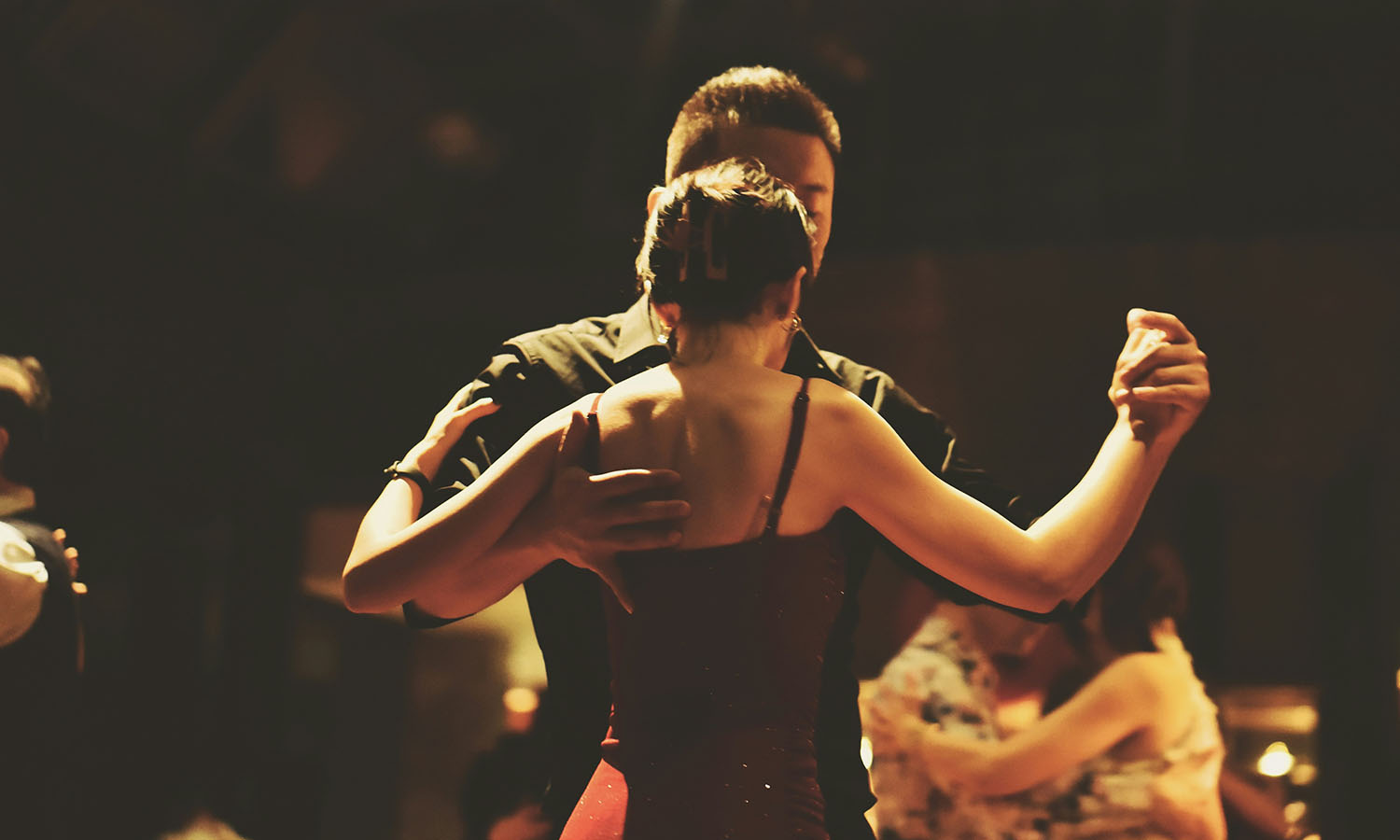
Once we learn all the basic steps (there are eight) as well as the figure called ocho, it’s time to practise with a partner. The leader – traditionally the man – invites the follower to dance, and together they assume the position called abrazo, the embrace.
From this moment on, the leader becomes the choreographer. Remember how I said that Argentine tango is improvisation? This is because it’s the leader who decides what figure comes next – and if they want me to do four ochos in a row, that’s what I will be doing. As a follower, I have no clue what’s coming next – and this is what makes tango something that can’t be rationally explained.
“Gentlemen must continuously ask themselves if they communicated clearly, and ladies need to ask themselves if they listened accurately,” says Nanni.
Except that it’s not the leader’s touch, pressure or speech that followers need to listen to. It’s not about trying to forecast and anticipate what the leader is going to do, either. The best way I can describe it is that if you attune yourself to the other and learn to quiet your thoughts, you will establish a connection with your dance partner that will allow you to move in unison. That’s why switching partners is key in learning to properly lead and follow; once you learn, you will be able to recreate that link with any tango dancer, even a perfect stranger. “It’s a sort of alchemy,” explains Nanni.
It’s precisely this connection – a mystical and fascinating thing – that makes Argentine tango so special, and so worth learning.
…Two Left Feet
Learning to listen is a constant process, however, and one obvious drawback for beginners is that they don’t know where to put their weight, simply because they don’t know what’s coming next. That makes it easy to lose balance, go in a different direction than their partner, or even step on their feet.
“When starting out, it can be difficult to think about your feet, your posture and what to do next at the same time,” says my dance partner, also a beginner. “And all that while trying to move elegantly and avoid bumping into others,” he adds. I nod empathetically – I have the same problems.
Things get increasingly more complex as we learn more figures, and I make a lot of mistakes. So does my partner, and we continuously have to start all over again. In addition to that, my feet start to hurt (even though my heels are low), and the more they do, the harder it is for me to be precise and graceful in my movements. Yet I know that this is the moment I need to push myself the most. So I continue.
“If you want to mark the rhythm, do it with your belly, with your guts, with your heart,” says Nanni. “Everything starts from the belly,” she adds, and as mysterious as it sounds, her tip immediately takes the pressure off my feet.
The Final Test: Libertango
“Ladies, with the left hand, you connect with your dance partner, and with the right, you push him away,” says Nanni, deftly explaining the equal exchange of energy that takes place in Argentine tango. Leaders will lead, and followers will listen and embellish with extra movements, like tracing a small circle on the ground with the foot in between steps – a firulete. It’s a perfect balance: no role is more important than the other.
I am still ruminating on this thought as Nanni pushes play on the song I was eagerly waiting for: Astor Piazzolla’s “Libertango”. As we reached the end of our class, this felt like my final exam: will I be able to follow?
My dance partner and I still look – and feel – insecure, and I am constantly trying not to lose my balance. But one by one, we manage to correctly perform all the steps, the figures, the closing movements, and, in accordance with the international code of tango, to stop when the music stops. It’s exhilarating, foot pain and all, and while we don’t look remotely as good as the more experienced dancers in our class, the feeling is well worth the effort.
Now equipped with the basics, will I attend the next milonga night in my town and wait for a kind stranger to invite me? Maybe one day I will muster the courage, but not before taking a few more classes. One thing is for sure: I need to feel that connection again. It was fascinating, unforgettable and addictive – even if it escapes any rational explanation.