In France, where I grew up, cheese is an institution. Family legend has it that I uttered the word “member” (for Camembert) before “papa” or “maman”. So when I was considering a multi-month stay in New York earlier this year, I had to plan ahead. Sure, it would be nice to have a view of Central Park or direct access to the High Line, but my first priority was to research the city’s best cheesemongers – and, if necessary, set up some kind of transatlantic shipping arrangement.
New York isn’t exactly famous for its dairy products, though it did play a key role in the history of cheese in the United States. In the early 19th century, the temperate climate and fertile pastures of Mohawk Valley and Herkimer County made this part of the country ideal for cattle farming. European immigrants – especially the Dutch, English and Italian arrivals – brought with them their traditional techniques, and many artisanal cheesemaking farms began to emerge.
In 1851, Jesse Williams founded the first American industrial cheese factory in upstate New York, and the concept spread like wildfire across the region, soon making upstate New York the epicentre of a burgeoning market. New York cheddar (paler and milder than its English counterpart) became a calling card of the area, and was sold across the US; it even made its way to Europe.
Back in the city, I’m standing with Josh Windsor in the Bleecker Street location of Murray’s, one of America’s leading cheesemongers, with another location in Grand Central Station, as well as dedicated artisanal cheese counters in more than 1,000 supermarkets across the country.
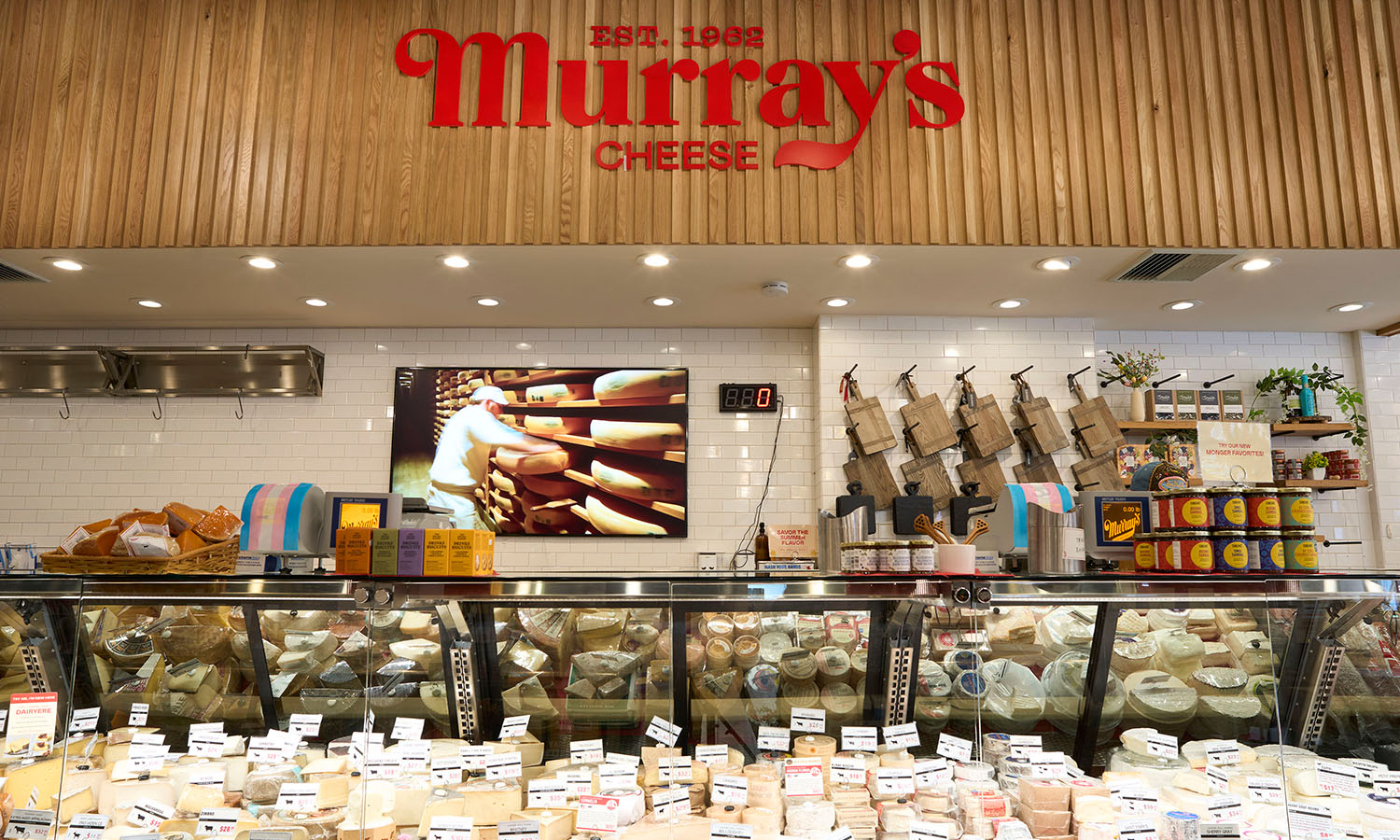
Windsor himself worked outside the cheese world for nearly 20 years, dedicating much of his free time to exploring cheese – until it became his second career over the course of the past decade. Now head of caves at Murray’s, he has unique insight into the palates of American cheese lovers here in the store’s flagship at the heart of Greenwich Village, about half of whose cheeses are imported from Europe. “I won’t lie to you, our most requested product is still Parmigiano Reggiano,” admits Windsor. “But in recent years, the share of American cheeses has grown, and we keep pushing the boundaries of creation.”
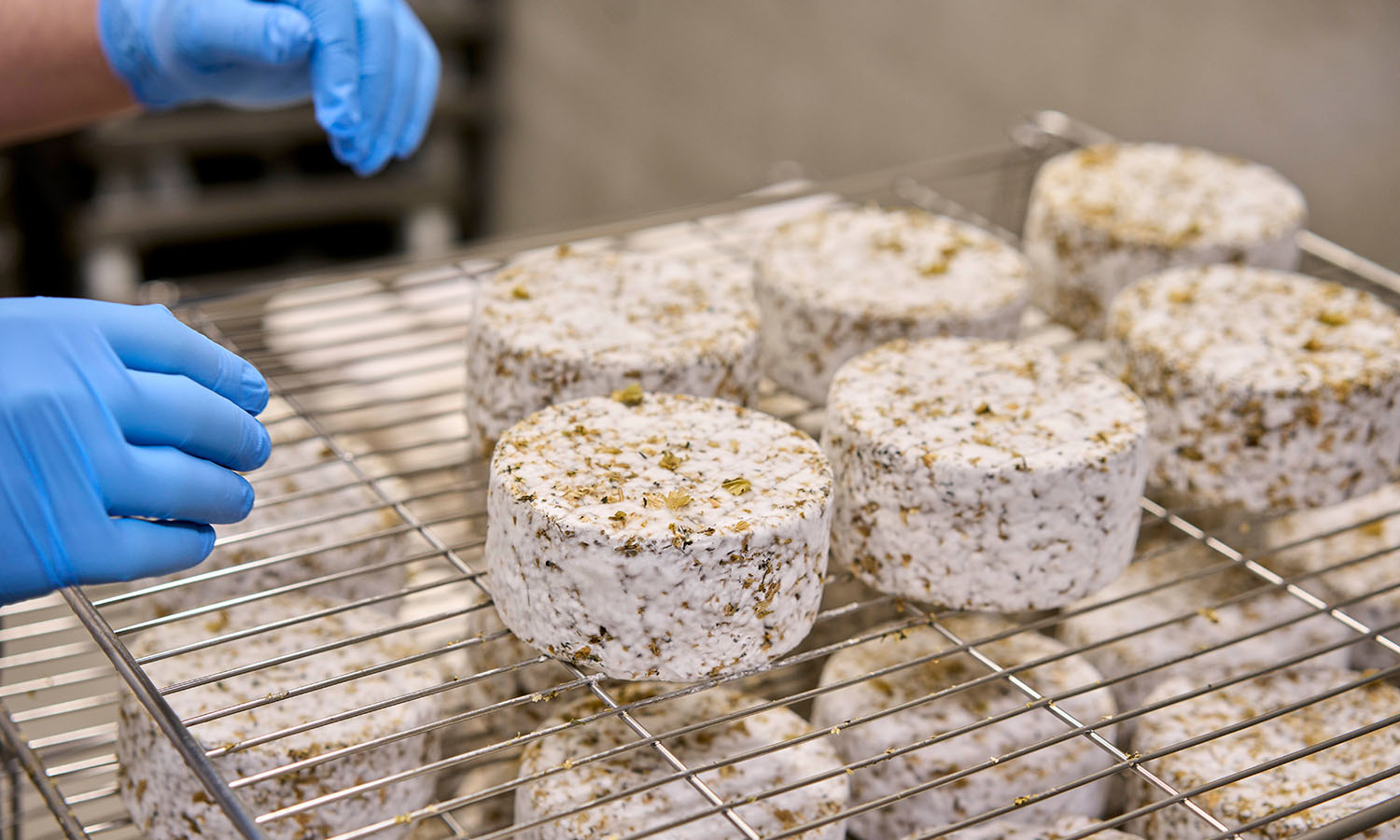
Among Murray’s latest experiments is Project X, a cow’s-milk tomme coated in a generous layer of fennel pollen before being bathed in Gewürztraminer – a cheese that has quickly become a customer favourite. Another bold creation is its Barnstorm Blue, which is moulded into a cube and washed with a rotating local malty ale to create a sticky coral-hued rind.
“Crazy ideas like this are why I love the American community so much. Sometimes I even ask to strip a European cheese of its label so we can experiment: smoke it, age it six months longer, coat it … Breaking from tradition allows for happy accidents,” Windsor explains.
With plenty of classes held on-site, Murray’s has made education a priority. Beautifully crafted boards are also displayed to encourage beginners to try cheeses they might otherwise have overlooked. “The playful, pre-sliced aspect helps break the intimidating idea of having to build a board yourself,” says Windsor.
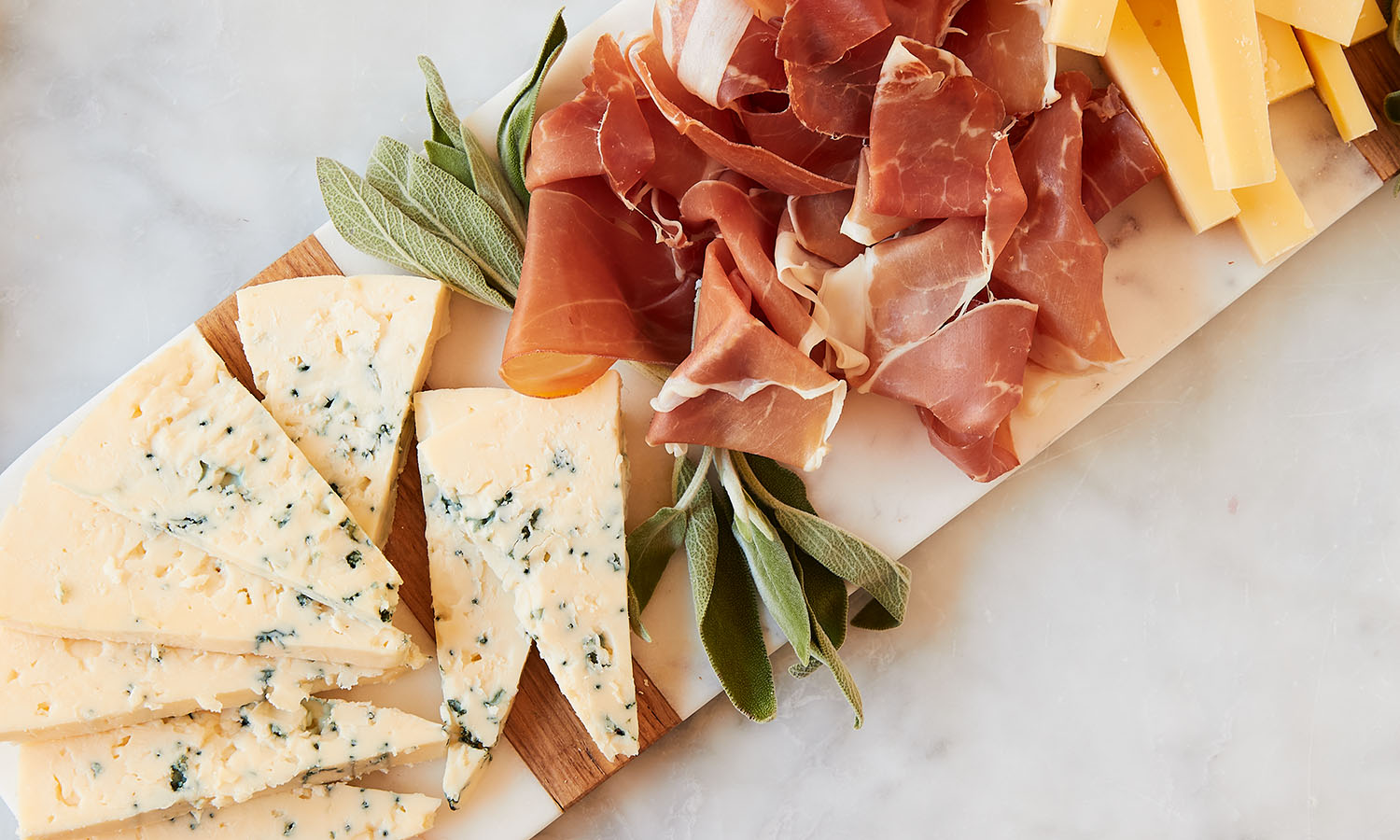
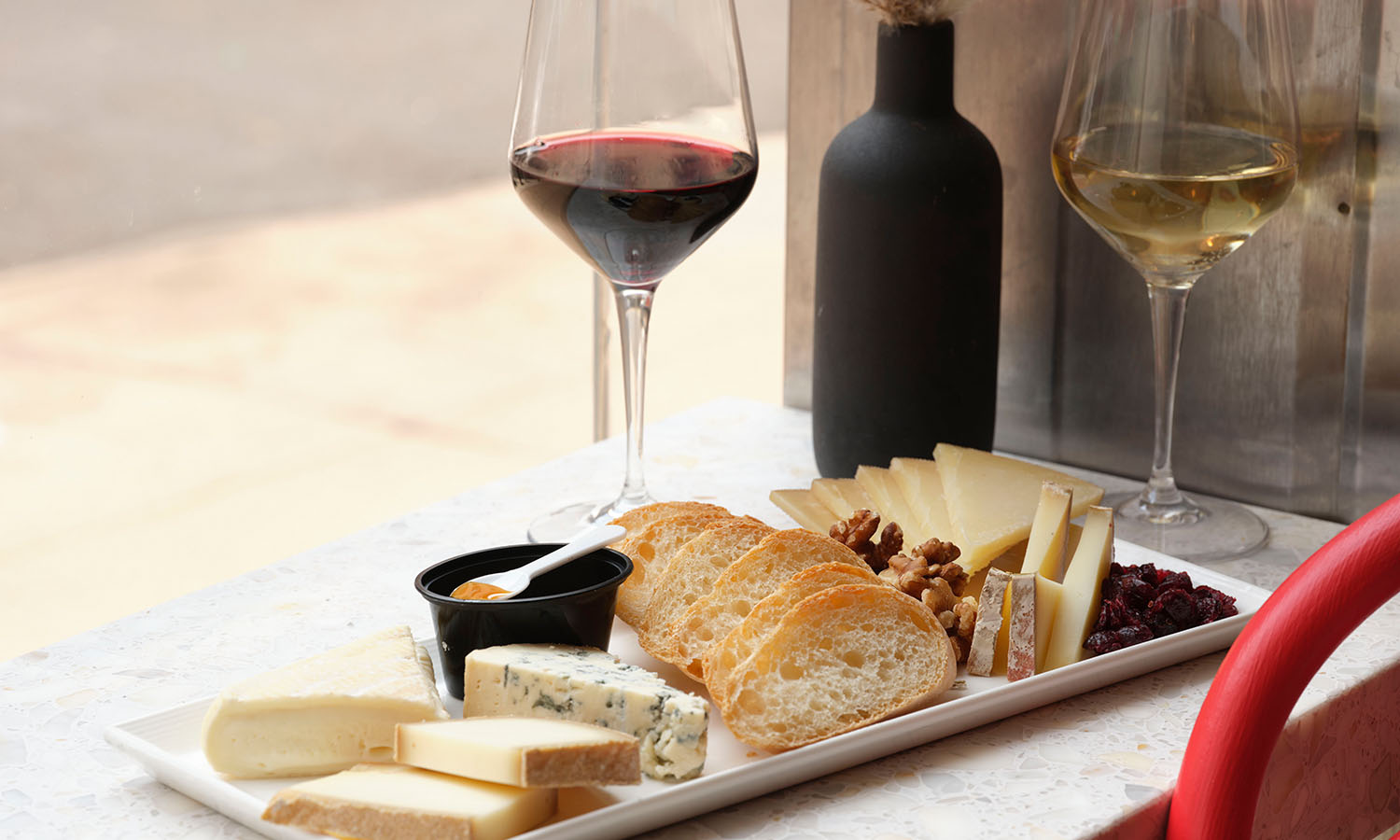
It’s a view shared by bestselling author Marissa Mullen, creator of the Instagram account @ThatCheesePlate, with nearly 450,000 followers. “What’s incredible about cheese is that it comes from precise know-how, aged under expert supervision. And yet you can eat it with crisps or in a sandwich,” quips Mullen, whose love of cheese began in her small university kitchen. Lacking a full suite of utensils, her cutting board became a constant companion, and cheese plates were an easy way to bring friends together. For each gathering, she posted a photo online and shared tips for assembling a platter (she calls it “Cheese by Numbers”), always highlighting the cheesemaker’s artistry.
“American cheese has come a long way. We’re putting more and more importance on our dairy history and the talent of our makers,” she reflects. These days, her greatest source of inspiration is the late Anne Saxelby, “a visionary who saw the potential of American cheesemakers before the rest of the world”.
Of all the places my New York cheese hunt would lead me, Saxelby Cheesemongers was the stop I awaited most eagerly. In 2006, the pioneering cheesemonger opened a tiny stand at Essex Market on the Lower East Side with the bold idea to offer exclusively American artisanal cheeses. “Six months after the launch, I met Anne at a tasting. I had my prejudices, but I was blown away by the quality,” recalls Benoit Breal, standing in front of the Chelsea Market shop. “Back home, I wrote a business plan and sent it to her.”
The Frenchman, then working in imports, joined the business immediately. The policy context was complicated: federal pricing policies favoured overproduction and large farms, to the detriment of boutique family enterprises. Facing impossibly low prices for their standardised milk, which would be sold to factories, some farms decided to go the opposite way to survive by emphasising the unique qualities of their small-batch milk. It was the beginning of a new artisanal shift not just in American dairy, but in American gastronomy more generally.
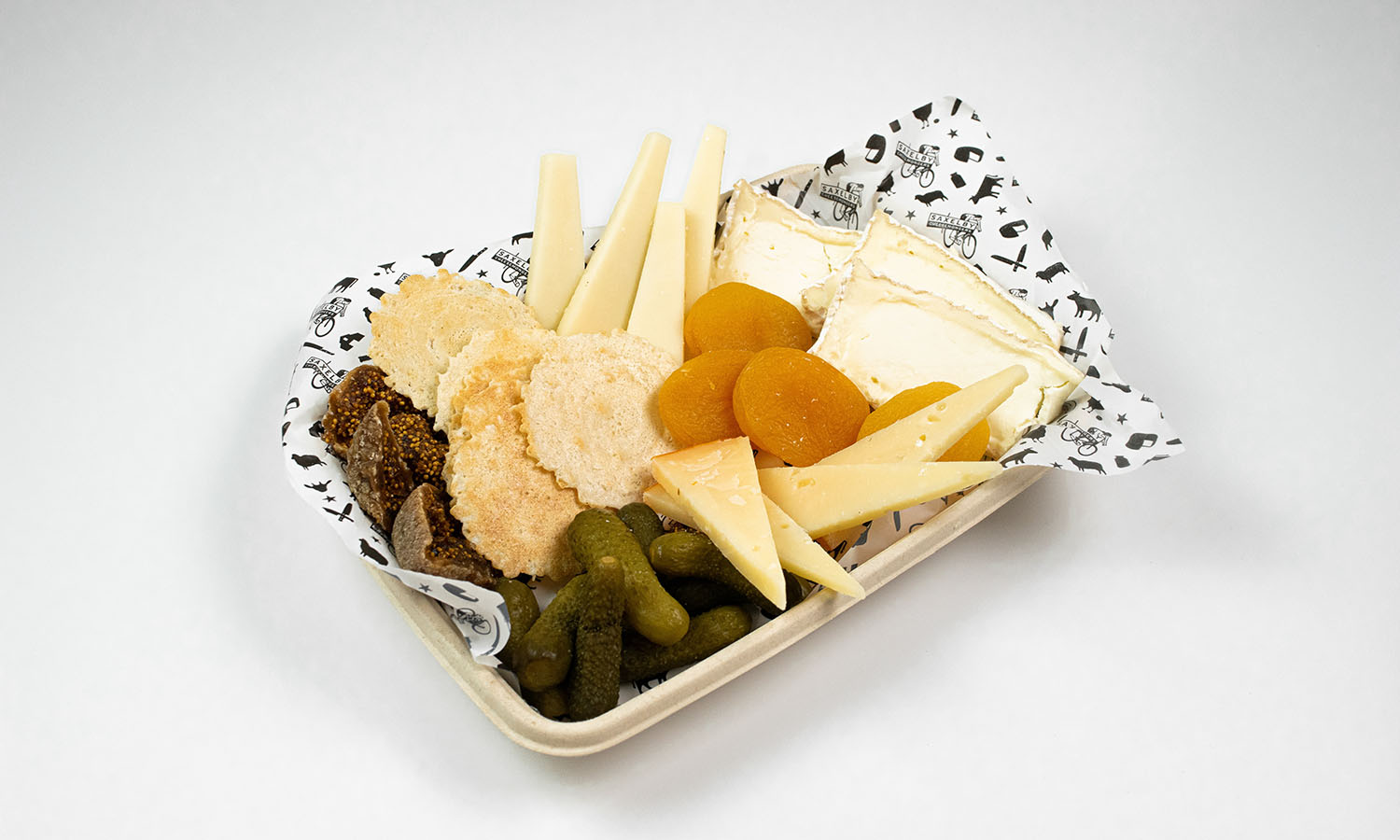
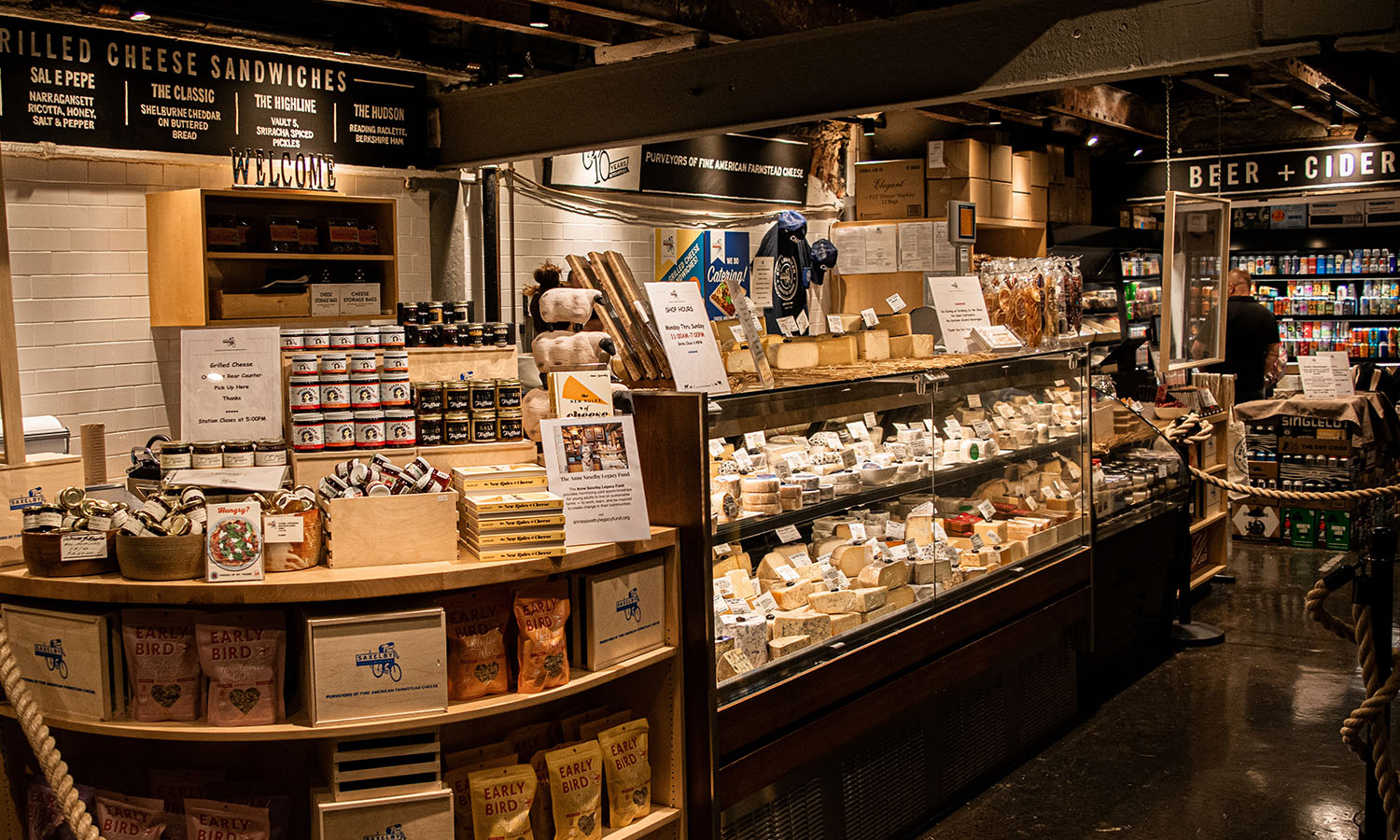
“Anne’s direct-sales concept helped a lot of farmers,” says Breal proudly. “We were a showcase for rural America and, [nearly] 20 years later, it’s still in our DNA.” He remembers the early days, chasing after customers in the market to encourage them to try different cheeses. Little by little, in those early years, Saxelby Cheesemongers became a favourite of top chefs, from Dan Barber (Blue Hill) and Mike Anthony (Gramercy Tavern) to Riad Nasr and Lee Hanson (Frenchette).
“The strength of American producers is that they’re not bound by any framework, lineage or tradition. They’re people who’ve travelled and gathered knowledge worldwide,” he explains. “They learned classical music scores, came back home, and changed a few notes to turn it into jazz.” While total freedom can sometimes lead to the worst, here, it very often leads to some astonishingly good cheeses.
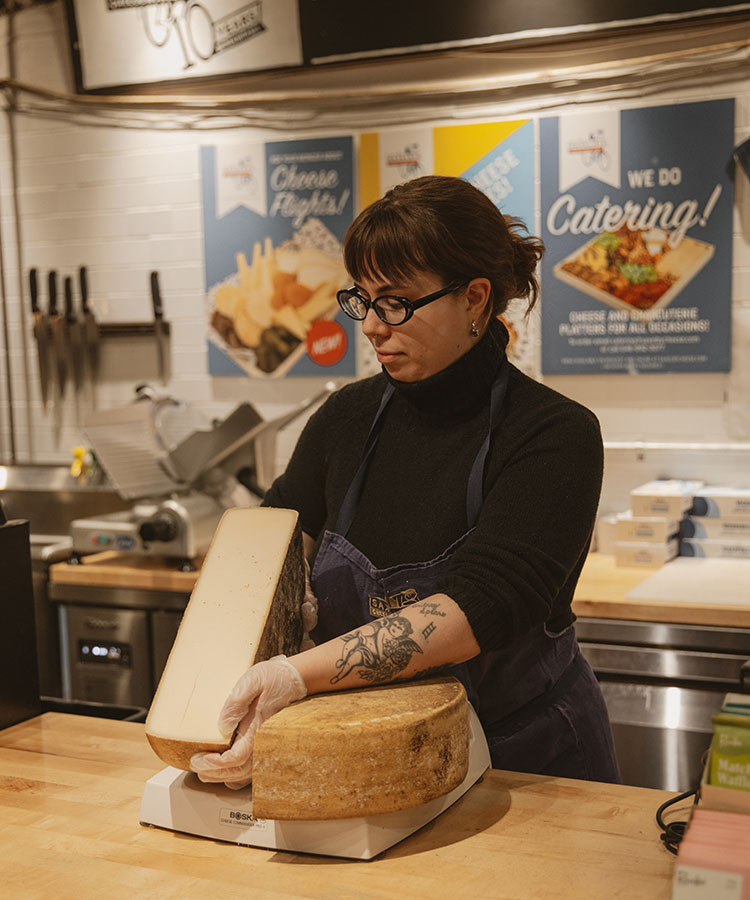
It’s impossible to leave the shop without a quick tasting. We start with Cabot Clothbound, a cheddar with notes of chicken broth and roasted nuts, coated in lard and aged in the British tradition. Next is Nancy’s Camembert, a sheep’s-milk cheese with a bloomy rind, gentle notes of mushroom and a distinct feeling of un goût de trop peu, which means: I wanted more. Badly.
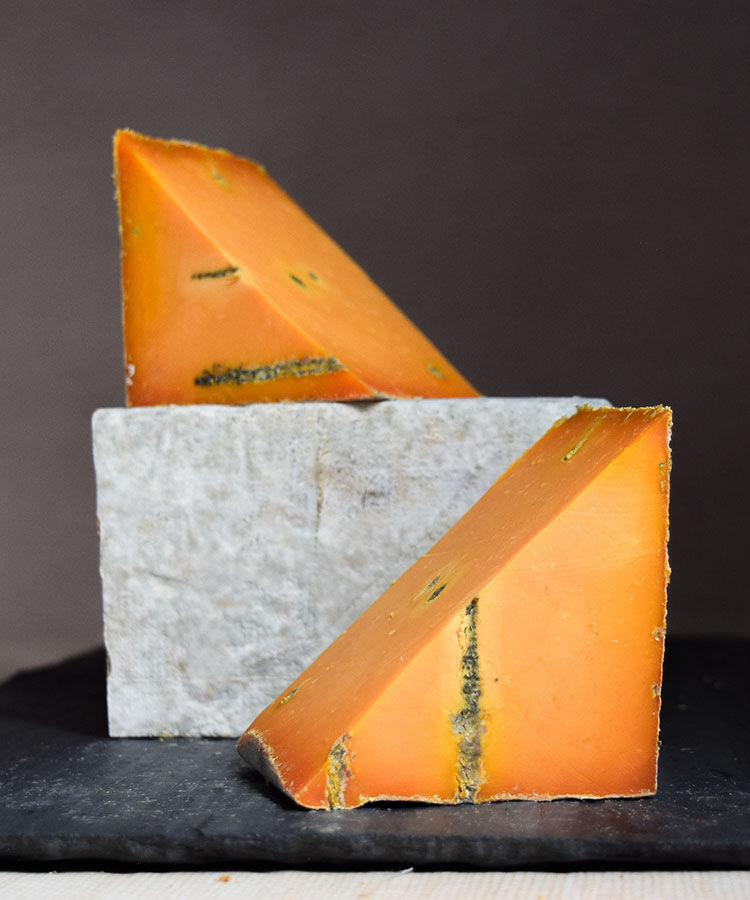
But the most remarkable cheese I tried that day was Two Red Lines, which was streaked with two layers of smoked paprika. It’s the creation of Laini Fondiller, the founder of Lazy Lady Farm, and is made when her goats are “on break” for the season. Still going strong at 73 years old, she was one of the pioneers of the artisanal movement that came to be known as the “goat ladies of the 1980s”.
Cheese in Situ
From a quick sandwich to a cheese cart in true European tradition, here are the best spots to indulge around town.
Saxelby Cheesemongers
Craving street food? Nothing beats the Chelsea Market cheesemonger for a gooey grilled cheese. Cheddar, raclette, ricotta – there’s something for everyone.
Gramercy Tavern
If the call of a comfy seat and a glass of wine gets too strong, head to this Flatiron institution and order a generous cheeseboard sourced from across the East Coast.
Daniel
Finding a cheese cart in the city has almost become mission impossible. At this Michelin-starred institution, head fromager Pascal Vittu offers a selection as local as it is refined.
The Connoisseur’s Plate
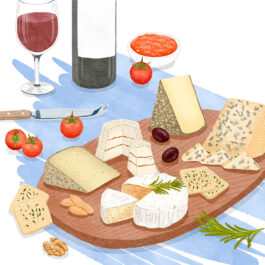
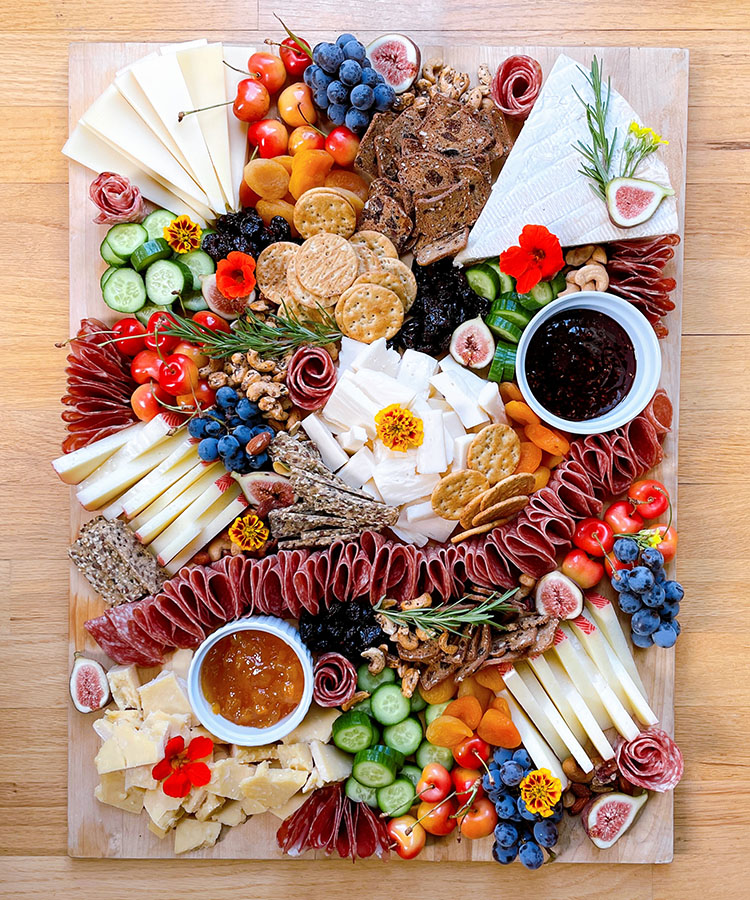
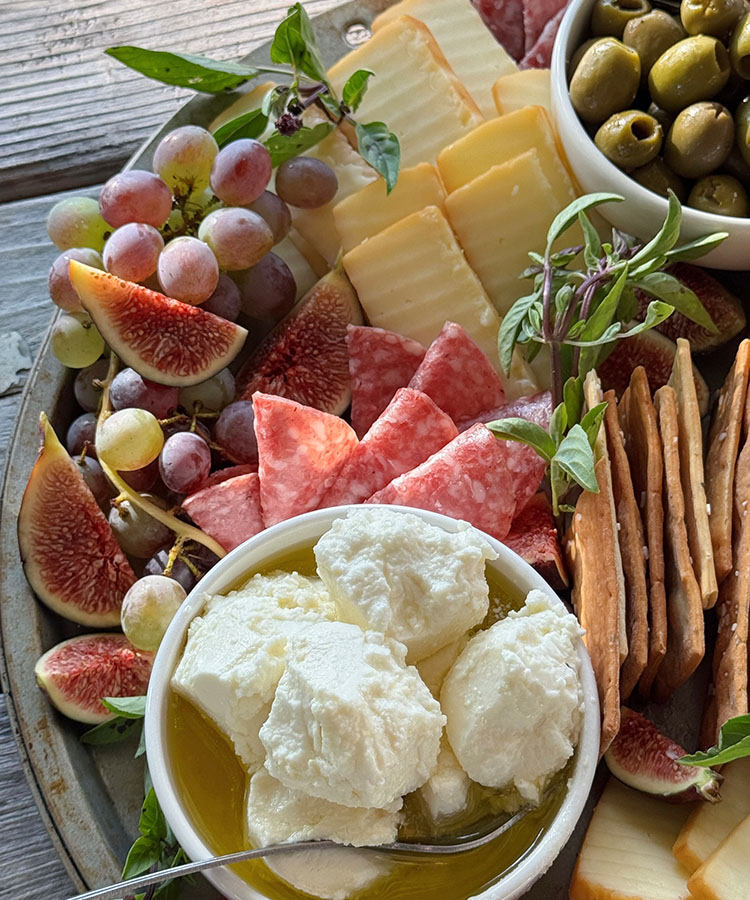
“When I make a cheeseboard, I have a rule: I like to feature something hard, something soft, and something funky,” says Marissa Mullen, bestselling author of That Cheese Plate Will Change Your Life and founder of the Instagram account @ThatCheesePlate. We asked the NYC cheese maven to create the perfect cheeseboard.
Hard: Pleasant Ridge Reserve from Uplands Cheese, Wisconsin
Pleasant Ridge Reserve is inspired by Alpine-style cheeses like gruyere and beaufort, with a dense, crystalline texture and notes of toasted hazelnut and caramel. I visited its farm a few years back and loved learning that the cows are continuously rotated to fresh pasture, resulting in high-quality milk that translates into an incredibly complex cheese.
Soft: Humboldt Fog from Cypress Grove, California
This is one of my favourite soft-ripened goat cheeses, easily recognisable by its distinct layer of vegetable ash through the centre. The flavour is bright and citrussy with a delicate earthiness that deepens as it ages. It’s one of those cheeses that feels both elegant and approachable, making it perfect for a refined cheese plate or a casual Sunday brunch spread.
Funky: Bayley Hazen Blue from Jasper Hill Farm, Vermont
An excellent blue cheese with all the depth and complexity of a bold blue, but with a balanced, buttery finish that makes it very approachable. It’s named after a historic military road in Vermont and aged in Jasper Hill’s underground caves. I love pairing this one with dark chocolate, a drizzle of maple syrup, or even a smoky bourbon.
Marissa Mullen’s upcoming third tome, I’ll Bring the Apps, offers a delicious collection of gorgeous light bites, bowls and beverages for every mood. Available in March 2026.
Share with your friends